

One Person’s Legal Separation Agreement Journey


A mediator can help draft a separation agreement, but it should be reviewed by lawyers before finalizing.
While family mediators play a valuable role in helping couples negotiate and document the terms of their separation, they cannot provide legal advice or create legally binding agreements on their own. Their primary functions include:
- Facilitating discussions between separating partners
- Documenting agreed-upon terms and conditions
- Creating a draft separation agreement framework
- Helping couples reach mutually acceptable solutions
For the agreement to be legally enforceable, each party should have their own independent legal counsel review the final document. This ensures the agreement protects both parties’ rights and meets all provincial legal requirements.
A mediator facilitates communication and helps couples create a fair, legally-sound separation agreement.
A family mediator serves as a neutral third party who guides separating couples through the process of negotiating and documenting their separation terms. They create a structured environment where both parties can:
- Express their needs and concerns in a safe, controlled setting
- Receive guidance on common separation issues like property division, support, and parenting arrangements
- Work through disagreements with professional assistance
- Develop solutions that benefit both parties and any children involved
The mediator then helps transform these discussions into a comprehensive separation agreement, ensuring all terms are clear, legally compliant, and protect both parties’ interests. While they cannot provide legal advice, mediators can recommend when independent legal counsel should be consulted.
While not required, having a lawyer review your mediated separation agreement is strongly recommended
Using a mediator for your separation agreement doesn’t legally require lawyer involvement, but having independent legal counsel review the final document provides important safeguards. A lawyer can:
- Ensure your legal rights are fully protected
- Review the agreement for potential issues or oversights
- Verify the terms are clear and enforceable
- Explain any complex legal implications
- Confirm the agreement meets all provincial requirements
While mediation helps create mutually acceptable terms, having a qualified family lawyer review the agreement before signing adds an essential layer of protection for both parties’ interests.
A mediator provides neutral expertise to create fair, legally-sound separation agreements while reducing conflict and costs.
Having a professional mediator draft your separation agreement offers several significant advantages. A qualified mediator helps navigate complex negotiations while maintaining neutrality and ensuring both parties’ interests are protected.
- Creates a collaborative environment that reduces tension and promotes open communication
- Offers cost-effective solutions compared to traditional litigation processes
- Ensures all legal requirements are met and documents are properly structured
- Helps couples reach mutually beneficial agreements more quickly and efficiently
- Provides expertise in addressing complex issues like asset division, support payments, and parenting arrangements
- Maintains confidentiality throughout the entire process
A separation agreement becomes legally binding when properly signed and witnessed, but legal review is recommended
A separation agreement drafted by a mediator becomes a legally enforceable contract once both parties have signed it in the presence of a witness. However, to ensure maximum legal protection, consider these important steps:
- Have an independent family law lawyer review the agreement before signing
- Ensure both parties have provided full financial disclosure
- Confirm all signatures are properly witnessed
- Keep multiple copies of the signed agreement in safe locations
While a mediator-drafted agreement is valid under Canadian law, having it reviewed by legal counsel helps ensure it meets all provincial requirements and protects your rights fully.
A mediator guides separating couples through structured negotiations to create a legally binding separation agreement
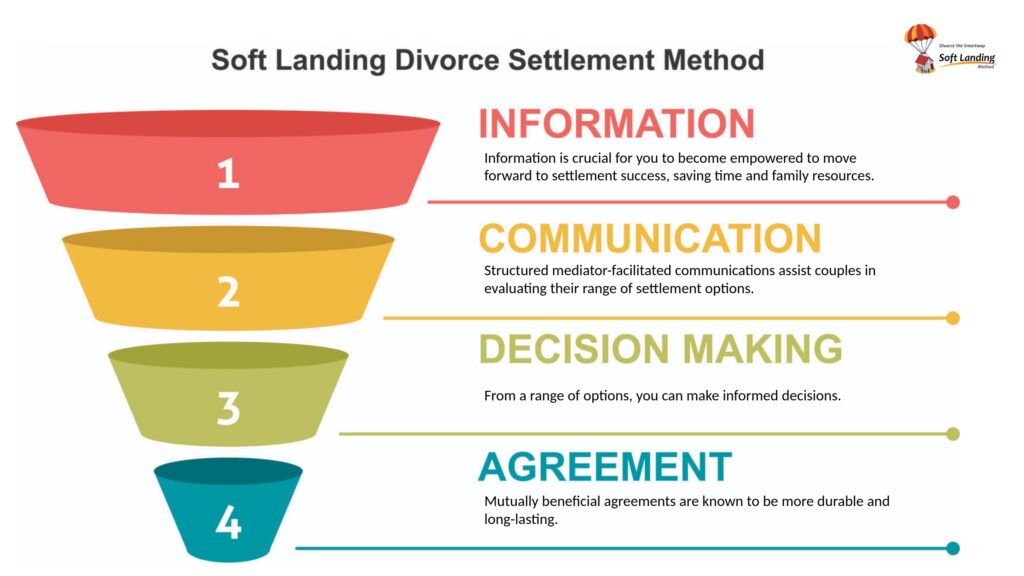
Creating a separation agreement through mediation follows a systematic process designed to help both parties reach fair and workable solutions. A qualified family mediator facilitates constructive discussions in a neutral environment.
- Initial consultation to explain the process and gather background information
- Multiple mediation sessions to address key issues like property division, support payments, and parenting arrangements
- Documentation of agreed-upon terms by the mediator
- Independent legal review recommended for both parties
- Final document preparation and formal signing
Once signed, the separation agreement becomes a legally binding contract that outlines each party’s rights and obligations. This collaborative approach typically costs less and takes less time than going to court.
Both mediators and lawyers can draft separation agreements, but their roles differ significantly
A separation agreement can be written by either a mediator or lawyer, with each professional serving distinct purposes in the process. Here’s how they typically assist:
- Mediators facilitate discussions between separating partners, help identify key issues, and draft initial agreements based on mutual understanding
- Lawyers ensure the agreement is legally sound, protect individual rights, and make certain the document meets all provincial legal requirements
- For best results, many couples work with both professionals – using a mediator to negotiate terms and a lawyer to review and finalize the legal document
It’s recommended to have a lawyer review any separation agreement before signing, even if drafted by a mediator, to ensure your legal interests are fully protected under Canadian law.
A comprehensive separation agreement covers property, support, custody arrangements, and other key legal matters between separating spouses.
A properly drafted separation agreement through mediation should address all essential aspects of the separation to protect both parties’ interests. A legally sound agreement must include:
- Property and Asset Division – Including family home, vehicles, investments, pensions, and shared debts
- Spousal Support – Amount, duration, and terms of payment if applicable
- Child Custody and Access – Parenting schedules, decision-making responsibilities, and holiday arrangements
- Child Support – Payment amounts, special expenses, and medical/dental coverage
- Tax Considerations – Including who claims dependents and how to handle shared credits
- Dispute Resolution – Process for handling future disagreements or needed modifications
The agreement should be written in clear language, include specific dates and amounts, and be reviewed by independent legal counsel before signing to ensure enforceability.
A separation agreement typically takes 2-4 mediation sessions over 4-8 weeks to complete
The timeline for drafting a separation agreement through mediation varies based on several key factors. Complex financial arrangements, child custody matters, and property division can extend the process. The level of cooperation between parties also significantly impacts the timeline.
Common factors affecting duration include:
- Number and complexity of issues to resolve
- Availability of financial documents and information
- Willingness of both parties to compromise
- Scheduling availability for mediation sessions
- Time needed for legal review between sessions
Most couples complete their separation agreement within 4-8 weeks, though straightforward cases may resolve more quickly, while complex situations could require additional time.
Mediation typically costs 60-75% less than traditional litigation for separation agreements
Choosing family mediation over traditional litigation can result in significant cost savings while creating legally binding separation agreements. Unlike the adversarial court process, mediation encourages direct communication between parties, reducing billable hours and legal expenses.
Mediation offers several financial advantages:
- Couples share the cost of one mediator instead of paying for two separate lawyers
- Fewer billable hours due to streamlined negotiations and focused sessions
- No expensive court filing fees or administrative costs
- Faster resolution means lower overall expenses
- Reduced paperwork and documentation requirements
While you may still want to have a lawyer review your final agreement, the overall cost of mediation remains substantially lower than full legal representation throughout the separation process.
Yes, mediation requires mutual consent and willing participation from both spouses
Mediation is a voluntary dispute resolution process that can only proceed when both parties explicitly agree to participate. The success of mediation depends on each spouse’s commitment to:
- Engage in open and honest communication
- Work collaboratively towards mutually beneficial solutions
- Participate in good faith negotiations
- Respect the mediation process and its confidential nature
If one spouse refuses to participate in mediation, couples will need to explore alternative methods for creating their separation agreement, such as negotiating through lawyers or going to court.
Yes, mediators help ensure complete and transparent financial disclosure between separating parties
A family mediator plays a crucial role in facilitating the exchange of financial information during separation negotiations. They help create a structured environment where both parties can share essential financial details openly and honestly.
The mediator assists with:
- Creating detailed lists of required financial documents
- Establishing timelines for information exchange
- Ensuring full financial transparency from both parties
- Explaining complex financial matters in clear terms
- Maintaining organized records of shared documentation
- Identifying gaps in financial disclosure
This professional oversight helps ensure the resulting separation agreement is based on complete and accurate financial information, making it more likely to withstand legal scrutiny and provide a fair outcome for both parties.
Mediation provides a faster, more affordable, and less adversarial path to reaching a separation agreement.
Choosing family mediation over traditional litigation offers several significant advantages for separating couples. The process empowers both parties to maintain control over important decisions while working with a neutral third-party mediator.
- Cost-effective solution – Mediation typically costs 60-70% less than going to court
- Faster resolution – Most cases reach agreement within 3-4 sessions versus months or years of litigation
- Preserves relationships – Especially important when children are involved
- Confidential process – Unlike court proceedings which become public record
- Flexible arrangements – Allows for creative solutions tailored to your family’s unique needs
The collaborative nature of mediation helps reduce stress and emotional trauma while creating lasting agreements that both parties are more likely to honour long-term.
The separation agreement undergoes legal review before being signed and finalized by both parties.
After a mediator completes the draft separation agreement, several important steps must occur to make it legally binding. The process typically involves:
- Independent Legal Review – Each spouse should have their own lawyer review the agreement to protect their individual interests
- Requested Revisions – Lawyers may suggest changes to ensure the agreement is fair and legally sound
- Final Modifications – The mediator incorporates any agreed-upon changes into the final version
- Formal Signing – Both parties sign the agreement in the presence of witnesses
- Legal Filing – The signed agreement may be filed with the court for additional enforceability
Once properly executed, the separation agreement becomes a legally binding contract that both parties must follow.
A fair separation agreement requires balanced input, transparent communication, and independent legal review
Mediators ensure fairness in separation agreements by following a structured, impartial process that protects both parties’ interests. A qualified family mediator maintains neutrality while helping couples reach equitable solutions.
The process typically includes:
- Full financial disclosure from both parties
- Equal opportunity for each person to express needs and concerns
- Clear documentation of all assets, debts, and responsibilities
- Balanced negotiation of key terms including support and property division
- Written explanations of legal rights and obligations
- Independent legal advice from separate lawyers who review the agreement
The final agreement should reflect both parties’ interests while adhering to Canadian family law principles. Having separate lawyers review the document provides an additional layer of protection and ensures the terms are legally sound and enforceable.
Yes, separation agreements written by mediators can be contested in court if specific legal grounds exist.
A separation agreement, even when drafted through mediation, remains subject to legal scrutiny and can be challenged in Canadian courts. The court may review and potentially modify the agreement if there are valid grounds for contestation, including:
- Lack of financial disclosure or misrepresentation of assets
- Undue pressure or duress during the mediation process
- Unconscionable terms that are grossly unfair to one party
- Failure to obtain independent legal advice before signing
- Significant changes in circumstances since the agreement was made
However, courts generally respect agreements reached through mediation and will only intervene when there is clear evidence of unfairness or procedural irregularities. It’s advisable to seek legal counsel before attempting to contest a mediated separation agreement.
Mediators maintain strict neutrality while helping couples create fair separation agreements
Family mediators serve as impartial third parties who facilitate constructive dialogue between separating couples. Their professional role requires maintaining complete neutrality throughout the mediation process.
During separation agreement drafting, mediators:
- Ensure both parties have equal opportunities to express their needs and concerns
- Guide discussions without taking sides or making decisions for the couple
- Help identify mutually beneficial solutions and compromises
- Verify that both parties fully understand the terms being drafted
- Document agreements using clear, unbiased language
While mediators may provide information about legal processes and common approaches, they do not offer legal advice or advocate for either party. Their primary objective is to help couples reach a balanced, workable agreement that serves both parties’ interests.
Separation agreements in Ontario typically cost between $1,000 to $5,000, depending on complexity
The cost of a separation agreement in Ontario varies significantly based on several key factors:
- Complexity of assets and issues to resolve
- Level of cooperation between parties
- Whether mediation is required
- Geographic location within Ontario
- Legal representation fees
When spouses can work together cooperatively and reach mutual decisions, costs typically stay lower. However, complex situations involving significant assets, business ownership, or child custody disputes may require more extensive legal work, increasing the overall cost.
Legal fees generally fall into two categories:
- Flat-rate packages: Starting around $1,000 for basic agreements
- Hourly billing: Ranging from $250-500 per hour for more complex cases
To manage costs effectively, consider working with a mediator first to resolve major issues before engaging lawyers to formalize the agreement. Always obtain detailed quotes from family law professionals based on your specific situation before proceeding.
Separation agreements in Ontario do not legally require notarization to be valid and enforceable
While notarization is optional for separation agreements in Ontario, having your document notarized can provide additional benefits and security. A notarized separation agreement involves having a notary public verify the identities of both parties and officially witness the document signing.
Here are the key advantages of notarizing your separation agreement:
- Enhanced credibility – Notarization adds an extra layer of authenticity and formal documentation
- Future dispute protection – Creates an official record of signing that can help prevent challenges later
- International recognition – May be required when using the agreement abroad or for immigration purposes
Remember that a separation agreement’s enforceability primarily depends on proper legal advice, full financial disclosure, and voluntary consent from both parties – not notarization. While having your agreement notarized can be beneficial, it does not automatically make it more legally binding in Ontario courts.
A separation agreement is a legally binding contract that outlines rights and obligations when couples separate in Ontario
Separation agreements provide a structured framework for separating couples to resolve important matters like property division, support payments, and child custody arrangements. These documents become legally enforceable once properly executed.
- Financial Disclosure: Both parties must provide complete documentation of assets, debts, income and expenses
- Key Components: Agreements typically cover:
- Division of property and assets
- Spousal and child support arrangements
- Child custody and access schedules
- Pension and retirement account division
- Legal Requirements:
- Independent legal advice is strongly recommended
- Both parties must sign voluntarily
- Signatures require witness documentation
- Agreement must comply with Ontario family law
- Enforcement Options:
- Can be registered with the court
- May be incorporated into court orders
- Enforceable through the Ontario court system
While couples can negotiate terms directly or through mediation, consulting a family law lawyer helps ensure the agreement is comprehensive, fair, and legally sound under Ontario law. Once signed, the agreement becomes a binding contract that courts will generally uphold and enforce.
A separation agreement in Ontario can be voided due to lack of consent, inadequate disclosure, or legal violations
A separation agreement may become invalid in Ontario under several key circumstances that affect its legal enforceability. Understanding these factors is crucial for protecting your rights and ensuring a valid agreement.
- Involuntary consent through duress, coercion, or undue influence can void the agreement
- Absence of independent legal advice for either party may invalidate the agreement
- Incomplete or dishonest financial disclosure during negotiations can render it void
- Legal violations or terms that go against public policy (such as waiving child support)
- Fraudulent misrepresentation or significant factual mistakes in the agreement
- Material changes in circumstances may warrant modification, though not automatically voiding the agreement
To ensure your separation agreement remains legally binding, it’s essential to work with a qualified family law professional who can guide you through proper documentation, full disclosure, and compliance with Ontario family law requirements.
A separation agreement in Ontario is legally binding when properly executed with specific requirements met
A valid separation agreement must meet several essential criteria to be legally enforceable in Ontario. The agreement becomes a binding contract when both parties follow proper legal protocols and documentation requirements.
- Voluntary Agreement: Both parties must sign willingly without any coercion, with full understanding of the terms
- Independent Legal Counsel: Each spouse should obtain separate legal advice before signing to understand their rights and obligations
- Complete Financial Disclosure: Both parties must provide thorough documentation of assets, debts, income, and expenses
- Child-Focused Provisions: Any terms involving children must prioritize their best interests, including custody and support arrangements
- Clear Terms: The agreement must clearly outline all arrangements regarding:
- Property division
- Spousal support
- Parenting responsibilities
- Financial obligations
- Proper Documentation: The agreement should be:
- Written clearly and comprehensively
- Dated and witnessed
- Notarized (recommended)
While not legally required, having the agreement notarized provides additional legal protection and validity. For maximum legal security, consulting with a family law professional during the creation and execution of the agreement is strongly recommended.
Pre-existing legal agreements like prenuptial and cohabitation contracts can override standard separation terms
Several types of legal documents can significantly impact your separation agreement’s terms and conditions. Prenuptial agreements signed before marriage take precedence in determining asset division and financial responsibilities. Similarly, unmarried couples who have signed a cohabitation agreement must follow those pre-established terms for dividing assets, debts, and other obligations.
- Prenuptial agreements outline specific terms for property division
- Cohabitation agreements establish rights for common-law partners
- Both documents typically supersede standard separation guidelines
- These agreements must be legally valid to be enforceable
Sign a separation agreement only after careful review and legal consultation
A separation agreement is a legally binding contract that significantly impacts your future and your children’s well-being. Before signing, ensure you fully understand and agree with all terms, as this document often forms the foundation for divorce proceedings.
Take these essential steps before signing:
- Have a qualified family lawyer review the document
- Ensure all assets and obligations are properly disclosed
- Understand the long-term implications of custody and support arrangements
- Verify that your rights and interests are adequately protected
- Confirm all terms are fair and reasonable
Remember, while you may feel pressured to sign quickly, taking time to review and understand the agreement is crucial for protecting your legal rights and future interests.
A legally binding Ontario separation agreement must include terms for property division, support, custody, and living arrangements.
A comprehensive separation agreement in Ontario requires several essential components to be legally valid and protect both parties’ interests. This document serves as the foundation for separating couples to establish clear terms for their future arrangements.
- Basic Requirements
- Full identification of both parties
- Effective date of separation
- Living arrangements and matrimonial home disposition
- Financial Matters
- Division of assets and debts
- Child support arrangements
- Spousal support terms (if applicable)
- Health insurance and benefits coverage
- Family Arrangements
- Child custody and access schedules
- Decision-making responsibilities for children
- Parenting time arrangements
- Legal Provisions
- Dispute resolution procedures
- Full and final release clause
- Confirmation of independent legal advice
Each separation agreement should be tailored to the specific circumstances of the separating couple. It’s essential to have the document reviewed by a qualified family law lawyer to ensure it meets all legal requirements and adequately protects both parties’ rights under Ontario law.
When spouses disagree on separation terms, mediation or legal representation can help reach a mutually acceptable agreement.
If you and your spouse cannot agree on separation terms, several professional dispute resolution options are available. Divorce mediation offers a cost-effective, collaborative approach where a neutral third party helps facilitate negotiations. Alternatively, each spouse can retain separate legal counsel to advocate for their interests and negotiate terms.
- A mediator helps identify common ground and works toward compromise
- Lawyers can provide legal advice and protect individual rights
- Court litigation remains an option if other methods prove unsuccessful
- The goal is reaching a fair, legally binding agreement for both parties
Courts may invalidate separation agreements that are unfair, incomplete, or against children’s interests
A separation agreement can be deemed legally unenforceable by Canadian courts under several key circumstances:
- Child welfare concerns – Terms that don’t adequately protect or serve the best interests of affected children
- Incomplete disclosure – Failure by either spouse to fully disclose all relevant assets, debts, and financial obligations
- Unfair terms – Agreements that are significantly one-sided or unconscionable
- Lack of independent legal advice – When one or both parties didn’t receive proper legal counsel before signing
To ensure your separation agreement remains valid and enforceable, it’s essential to be transparent, fair, and prioritize children’s wellbeing while working with qualified legal professionals.
A separation agreement must be clear, reasonable, and legally sound to be valid in court.
While couples can draft their own separation agreement, it’s crucial to create a comprehensive and legally enforceable document. The agreement becomes a binding contract that courts will generally uphold, particularly regarding property division and spousal support arrangements.
To create a valid separation agreement, ensure it includes:
- Clear and specific terms regarding asset division, support payments, and parenting arrangements
- Fair and reasonable conditions that both parties can realistically fulfill
- Complete financial disclosure from both parties
- Proper legal language that leaves no room for misinterpretation
- Dated signatures from both parties, preferably witnessed
Since courts generally won’t modify agreed-upon terms for property division or spousal support, it’s essential to carefully consider all provisions before signing. Consider consulting a legal professional to review the final document to ensure it protects your interests.
Yes, you can write your own separation agreement in Ontario, though legal guidance is strongly recommended
While Ontario law allows couples to create their own separation agreements, having professional legal support helps ensure the document is legally sound and protects both parties’ interests. A properly drafted separation agreement is a crucial legal document that outlines the terms of your separation.
Key elements to consider when creating a separation agreement include:
- Legal Requirements: The agreement must comply with Ontario family law and be properly signed and witnessed
- Essential Components: Address child custody, support payments, property division, and debt allocation
- Financial Disclosure: Both parties must provide complete and honest financial information
- Clear Terms: Use specific, unambiguous language to prevent future disputes
To ensure your separation agreement is legally valid and enforceable, consider these important steps:
- Seek independent legal advice before signing
- Include detailed financial statements from both parties
- Have the document properly witnessed and consider notarization
- Keep detailed records of all assets and debts
- Consider consulting a financial advisor for complex financial matters
While self-drafting can save money initially, having a lawyer review your agreement can prevent costly legal issues in the future and ensure your rights are protected under Ontario law.
A separation agreement provides a legally binding framework for separating couples to resolve key issues without court intervention.
A separation agreement serves as an essential legal document that helps couples navigate their separation process efficiently and cost-effectively. This formal agreement allows separating partners to:
- Make clear decisions about child custody and support arrangements
- Establish property division and asset distribution terms
- Determine spousal support obligations
- Avoid expensive and time-consuming court litigation
- Maintain control over important life decisions
Most importantly, when couples later proceed with divorce, courts typically honour these pre-established arrangements by incorporating them into the final divorce judgment, streamlining the entire legal process.
A separation agreement is a legally binding contract between married partners that formalizes their separation terms.
A separation agreement (also known as a Marital Separation Agreement) serves as an official document outlining how separating spouses will handle important matters during their separation. This legally enforceable contract establishes clear terms for both parties and can be upheld in court if breached.
The agreement typically covers:
- Property division and asset allocation
- Child custody and access arrangements
- Child and spousal support obligations
- Financial responsibilities and debt management
While not legally required to be in writing, documenting the agreement is strongly recommended as verbal agreements are difficult to prove in court. Courts will generally uphold separation agreements provided they are fair, reasonable, and properly executed by both parties.
Legal separation occurs when spouses live separate lives, regardless of physical living arrangements
A couple can be considered legally separated even while sharing the same residence. The key factor is not physical separation, but rather demonstrating that both parties are living independent lives. While maintaining separate addresses provides clear evidence of separation, many couples opt for in-house separation due to financial constraints or childcare responsibilities.
To establish legal separation status, couples must prove they are living separately by demonstrating several key lifestyle changes:
- Maintaining separate sleeping arrangements and personal spaces
- Having independent financial accounts and responsibilities
- Taking meals separately and not sharing household duties
- Ceasing intimate relations and couple-oriented activities
- Minimizing social interaction and communication between spouses
- Managing separate schedules and daily routines
Courts typically require substantial evidence of these lifestyle changes to recognize an in-house separation. Consulting with a legal professional is recommended to properly document and establish separation status.
Brief reconciliation periods under 90 days will not restart your one-year separation countdown
The one-year separation period allows for temporary reconciliation attempts without automatically restarting the divorce timeline. If you reconcile with your spouse for less than 90 days, your original separation date remains valid. However, if you live together for more than 90 consecutive days, the one-year separation period will restart from the date you separate again. This policy encourages couples to:
- Attempt reconciliation without fear of prolonging the divorce process
- Work on their marriage during the separation period
- Make informed decisions about their relationship’s future
- Maintain their legal separation timeline if brief reconciliation attempts fail
Ontario requires a one-year separation period before granting most divorces
Under Ontario family law, couples must live separately and apart for at least 12 months before a divorce can be finalized. This mandatory separation period begins from the date spouses begin living separately, even if they remain under the same roof with separate living arrangements.
There are only two exceptions to the one-year waiting period:
- Adultery – When one spouse has committed adultery
- Cruelty – When there is physical or mental cruelty that makes continued cohabitation intolerable
While couples can initiate divorce proceedings as soon as they separate, the court will not issue a final divorce order until the full separation period has elapsed, unless one of the above exceptions applies. This cooling-off period is designed to give couples time to consider reconciliation and make thoughtful decisions about their future.
There is no legal time limit on how long spouses can remain separated in Canada
Married couples can remain legally separated indefinitely without being required to file for divorce. Legal separation has no maximum duration and does not automatically convert to divorce after any specific period. The main reason couples typically choose to formally end their marriage through divorce proceedings is when one or both parties wish to remarry. Otherwise, separated spouses can maintain their married status while living apart for as many years as they prefer.
- Separation can continue indefinitely
- No automatic conversion to divorce
- Divorce only required for remarriage
- Couples maintain legal married status while separated
Legal separation in Ontario does not require formal court filing, but documenting your separation date is important
In Ontario, you do not need to file any legal paperwork to be considered separated from your spouse. Separation occurs when you and your spouse begin living “separate and apart” with the intention to end the relationship. However, creating a formal separation agreement is highly recommended to protect both parties’ interests.
A well-documented separation should include:
- Written record of your official separation date
- A detailed separation agreement outlining arrangements for:
- Child custody and support
- Property division
- Spousal support
- Debt responsibilities
- Documentation of any changes to living arrangements
While you can separate while living under the same roof, you must demonstrate that you’re living separate lives. This separation period becomes important if you later decide to file for divorce, as Ontario requires a minimum 12-month separation period before granting a divorce.

 Full
Full 
External links that may interest you
- Separation and annulment | Alberta.ca – A separation agreement is a contract between parties who are separating or divorcing, covering child custody and support.
- Separation – Guide on making a separation agreement legally binding, covering essential issues.
- Making an agreement after you separate | Family Law in BC – Tips on writing a separation agreement with or without professional help.
- Write your own separation agreement – Family Law in BC – Guide to writing a legally binding separation agreement during divorce or separation.
- Know Your Rights for Separation and Separation Agreements – Overview of what a separation agreement is and its importance.
- Separation Agreements – Emphasizes the need for independent legal advice for legally binding agreements.
- Divorce and Separation – Information on separating or divorcing and related family law complexities.
- Legal separation (separation from bed and board) – Explains how legal separation differs from divorce, maintaining marital bonds.
- Separation of Legal Spouses and Common-law Partners – Assistance with completing forms for separation.
- When Couples Separate – Clarifies that legal separation doesn’t require a court order but requires resolving family law matters.
- What Is a Legal Separation Agreement? – Explains the requirement of living apart for at least a year before divorce in Saskatchewan.
- Separation agreement certificates – Explains how separation agreements can arrange custody, access, and child support.
- Make a separation agreement – Outlines creating a written contract to manage separation issues.
- Separation – Covers Manitoba law on separation matters for spouses and common-law partners.
- Separation agreements – FREE Legal Information – Highlights that writing a separation agreement is voluntary but beneficial for establishing legal separation.

Ken Maynard CDFA, Acc.FM
I assist intelligent and successful couples in navigating the Divorce Industrial Complex by crafting rapid, custom separation agreements that pave the way for a smooth transition towards a secure future. This efficient process is achieved in about four meetings, effectively sidestepping the excessive conflicts, confusion, and costs commonly linked to legal proceedings. Clients have the flexibility to collaborate with me either via video conference or in-person through a DTSW associate at any of our six Greater Toronto mediation centers, located in Aurora, Barrie, North York, Vaughan, Mississauga, and Scarborough.