
Streamline Asset Division with Our Equalization Payment Guide

Divorce Equalization Payment - Fair Asset Division
Easily calculate equalization payments for a fair and accurate division of marital assets and debts with our Divorce Equalization Payment Calculator. Ensure financial fairness post-divorce
Understanding Divorce Equalization Payments in Ontario
The process of divorce can be emotionally and financially challenging. In Ontario, one important aspect of divorce settlements is the equalization payment. This article provides an in-depth understanding of equalization payments and how they are calculated.
We will explore the purpose of these payments, the legal framework, the factors considered in their calculation, and the role of assets, debts, and spousal support. Additionally, we will discuss challenges and disputes during the determination of equalization payments and provide strategies for negotiating fair settlements.
Lastly, we will touch on the tax implications associated with divorce equalization payments.
What is an Equalization Payment in a Divorce?

When a married couple decides to separate or divorce in Ontario, the law recognizes that both spouses have made contributions to their shared assets during the marriage. An equalization payment, also known as the equalization of net family property (NFP), is a financial transfer made between spouses to ensure a fair division of their wealth accumulated throughout the marriage.
The purpose of an equalization payment is to equalize the difference in the value of the net family property of each spouse. Net family property refers to the value of assets accumulated during the marriage, minus any debts and liabilities. Typically, the spouse with the higher net family property is required to make a payment to the other spouse to achieve equalization.
It’s important to note that not all assets are included in the calculation of net family property. Certain assets, such as gifts or inheritances received by one spouse during the marriage, may be excluded. Additionally, assets owned by a spouse before the marriage are typically deducted from their net family property total.
When determining the value of assets for equalization, it’s crucial to obtain accurate and up-to-date valuations. This may involve appraisals of real estate, businesses, investments, and other significant assets. In cases of disagreement over asset values, spouses may need to seek the expertise of financial professionals or appraisers to reach a fair resolution.
How are Equalization Payments Calculated?
Calculating equalization payments involves several steps to determine the difference between each spouse’s net family property:
- Determine the date of separation: The calculation is based on the net family property of each spouse at the date of separation.
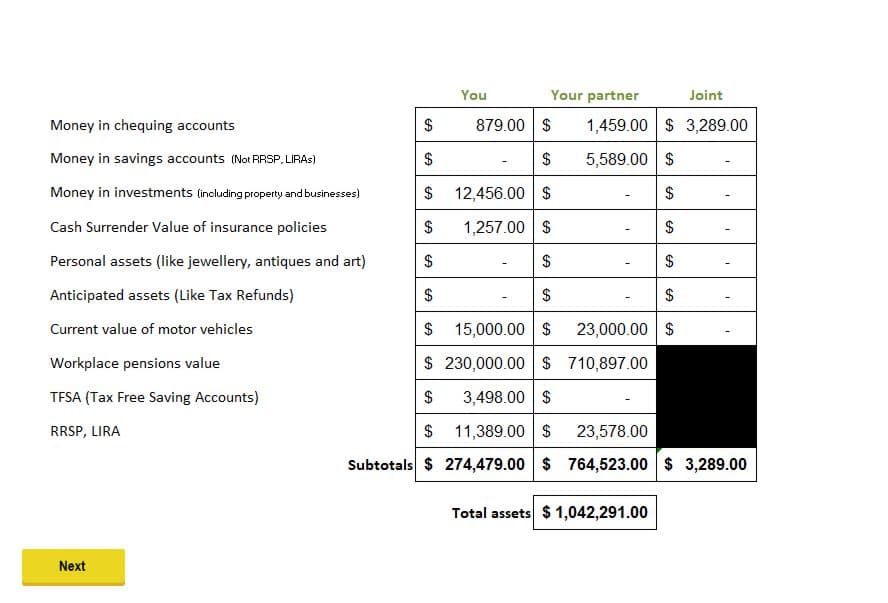
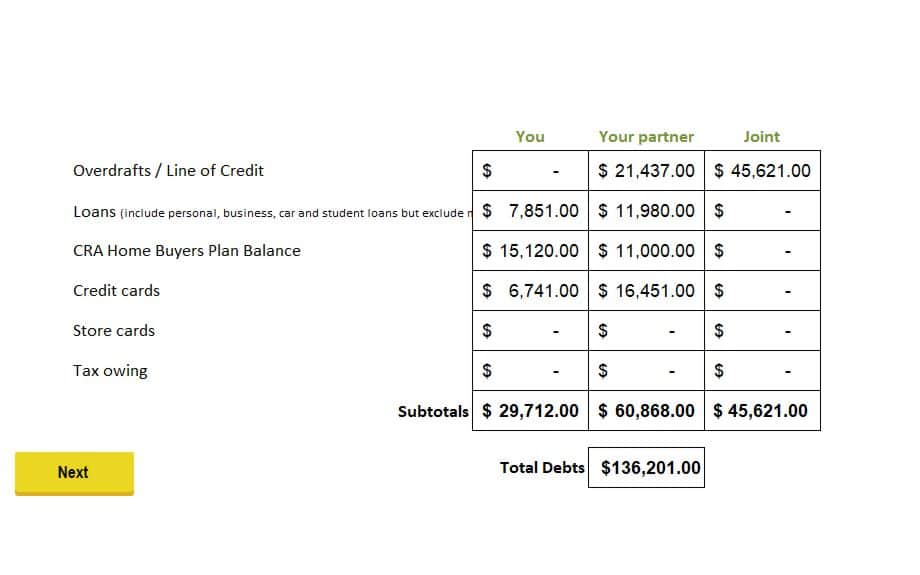
- Valuation of assets and debts: All assets and debts owned by each spouse at the date of separation are valued to determine their worth.
- Calculate net family property: Subtract the value of debts and liabilities from the value of assets for each spouse.
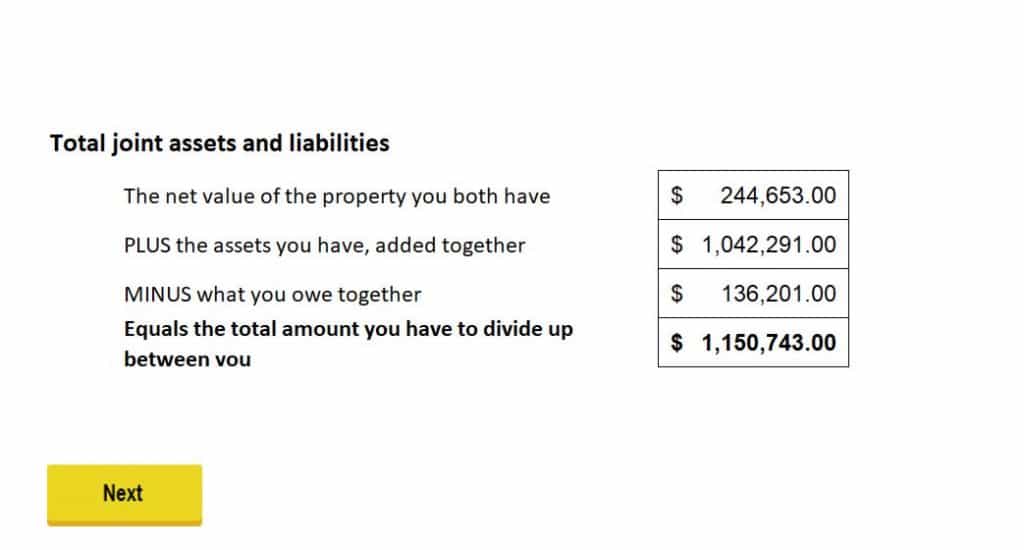
- Equalization payment calculation: The spouse with the higher net family property must pay the other spouse to ensure equalization.
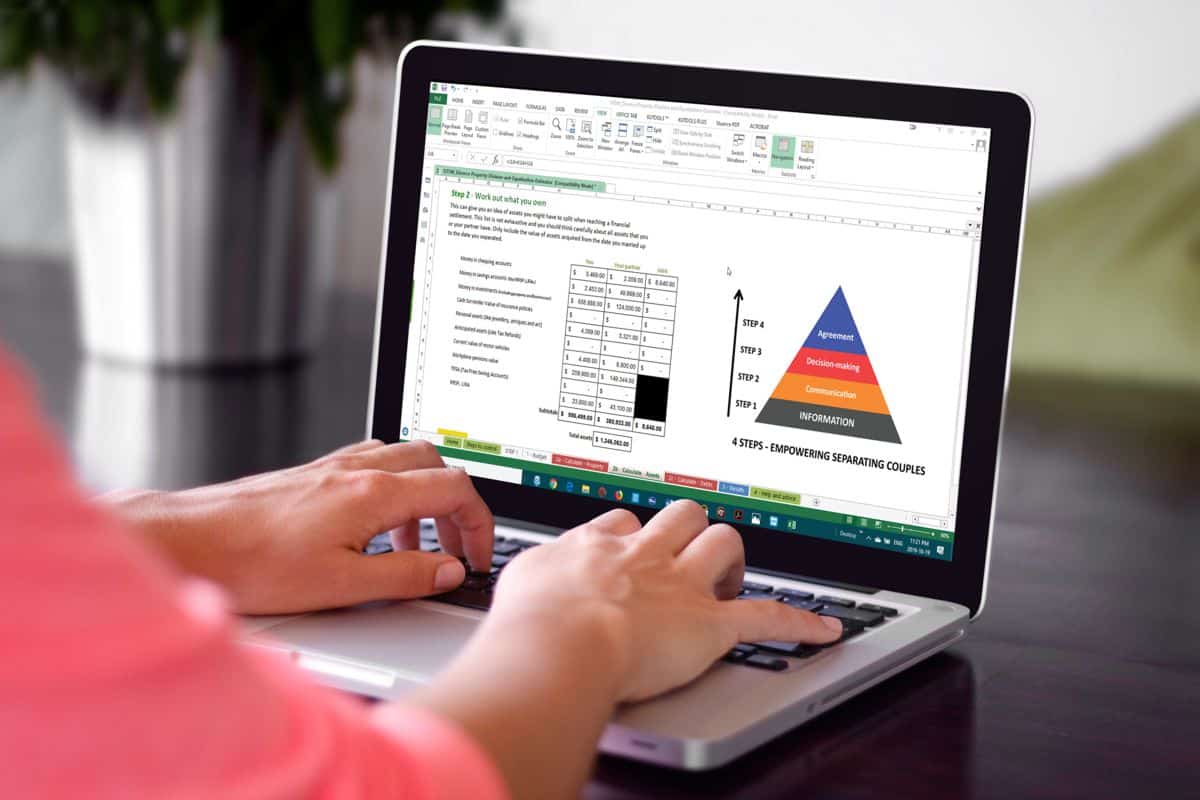
The calculation of equalization payments can be complex. Utilizing an Asset Division Calculator, alongside seeking professional advice from family law experts or consulting the Ontario Family Law Act (FLA), can provide specific guidance.
Using a Marriage Settlement Calculator, equalization payments can be determined to ensure that both spouses leave the marriage with an equitable share of the wealth accumulated during the marriage. This process helps address any financial disparities and aims to provide a fair resolution in the event of a divorce or separation.
Exploring the Purpose of Divorce Equalization Payments
Equalization payments aim to achieve financial fairness and equity in the context of divorce. By equalizing the difference in net family property, this mechanism ensures both parties are fairly compensated for their contributions during the marriage.
Equalization payments do not necessarily mean that assets are physically divided or sold. Instead, they provide monetary compensation to balance the difference in wealth between spouses, ensuring a more equitable outcome regardless of individual asset ownership.
Equalization payments consider various factors that contributed to the accumulation of wealth during the marriage, including non-financial contributions like caregiving responsibilities, career sacrifices, and support for the other spouse’s endeavors. This holistic approach recognizes the value of each spouse’s contributions to the marriage.
Equalization payments prevent any unfair advantage or disadvantage from the division of assets in a divorce. This financial balancing act ensures that both parties can move forward with a reasonable degree of financial stability and independence post-divorce.
Understanding the Legal Framework in Ontario
In Ontario, the legal framework surrounding equalization payments is governed by the Family Law Act (FLA). This legislation provides guidelines and principles for the division of property and the determination of equalization payments.
Under the FLA, both married couples and common-law partners who have cohabitated for a certain period are eligible for equalization payments. However, equalization payments are specific to married couples.
The legislation also outlines the exemptions and exclusions that may apply when calculating net family property, such as gifts and inheritances received during the marriage, certain personal injury settlements, and certain types of property acquired after the date of separation.
The FLA in Ontario also addresses the issue of unequal division of property in certain circumstances. In cases where an equal division of property would be unconscionable, the court has the discretion to make an unequal division based on various factors, including the length of the marriage, the needs of any children, and any agreements between the parties.
Factors Considered in Calculating Equalization Payments
Several factors are considered when calculating equalization payments:
- Duration of the marriage: The length of the marriage plays a significant role in the calculation. Marriages lasting less than five years may result in lower equalization payments.
- Individual net family property: The value of each spouse’s net family property is key in determining the equalization payment.
- Assets and debts acquired during the marriage: All assets and debts accumulated by either spouse during the marriage are considered.
- Exclusions and exemptions: Certain properties and assets may be exempt from equalization, as defined by the FLA.
- Other financial considerations: Additional factors, such as spousal support obligations and changes in financial circumstances, may also be considered.
Consulting a family law professional is important to fully understand the specific factors that may apply to your case.
The Role of Assets and Debts in Equalization Payments
Assets and debts acquired during the marriage significantly impact equalization payments. Financial assets, such as bank accounts, investments, real estate, and vehicles, are typically included in the calculation. Non-financial contributions, such as homemaker services, childcare, and support for a spouse’s career, are also considered.
Accurate valuations for all assets and debts at the date of separation are essential. The process can vary depending on the jurisdiction, and different regions may have specific laws and regulations governing the division of assets and debts.
Navigating Spousal Support and Equalization Payments
Spousal support and equalization payments are distinct legal concepts. Equalization payments deal with the fair division of assets acquired during the marriage, while spousal support addresses ongoing financial needs post-divorce. Understanding these distinctions and seeking guidance from a knowledgeable family law professional can help ensure a fair and equitable resolution.
Challenges and Disputes in Determining Equalization Payments
Disputes regarding the calculation and distribution of equalization payments may arise during divorce proceedings, making a Separation Payment Calculator a valuable tool. These challenges can stem from differences in the valuation of assets, the inclusion or exclusion of specific properties, or disagreements over the fair division of wealth.
Seeking the assistance of a family law professional can help negotiate on your behalf and ensure your rights and interests are protected. Mediation or collaborative approaches can also be beneficial in reaching mutually acceptable solutions.
Another common source of contention is the treatment of debts acquired during the marriage. Disagreements may arise regarding who should be responsible for which debts. Careful review of all financial records and documentation is essential to accurately assess the debts and ensure a fair distribution.
Strategies for Negotiating Fair Equalization Payments
Negotiating fair equalization payments involves consideration of various factors, open communication, and a willingness to seek common ground. Some strategies for achieving a fair settlement include:
- Open and transparent financial disclosure: Accurate and comprehensive disclosure of all assets and debts is crucial.
- Expert guidance: Seek advice from family law professionals to navigate the complexities and ensure your rights are protected.
- Mediation and collaborative approaches: Engage in alternative dispute resolution methods for more amicable negotiation.
- Considering long-term implications: Evaluate the long-term financial implications of proposed equalization payments.
- Being open to compromise: Both spouses should consider compromises and alternative solutions for a fair settlement.
Approach the negotiation process with a clear understanding of your financial situation and future needs. Conduct a thorough analysis of your financial assets, liabilities, income, and expenses. Effective communication channels with your ex-spouse can facilitate productive discussions and foster cooperation.
Tax Implications of Divorce Equalization Payments
Understanding the potential tax implications associated with equalization payments is crucial. In Canada, equalization payments made as a result of divorce are generally not considered taxable income for the recipient. However, they are also not tax-deductible for the payer.
It is recommended to consult with a tax professional to fully understand the specific tax implications that may apply to your situation. While equalization payments themselves may not be taxable, any investment income generated from these funds could be subject to taxation. This distinction is significant for individuals receiving a lump sum equalization payment who choose to invest it for future financial security.
Additionally, the tax treatment of equalization payments can vary depending on the nature of the payment. For instance, if the payment is designated as spousal support or child support, different tax rules may apply. Spousal support payments are generally taxable for the recipient and tax-deductible for the payer, while child support payments are typically not taxable or deductible.
Equalization payments in Ontario involve splitting the difference in net family property (NFP) values between spouses
Under Ontario’s Family Law Act, equalization payments are calculated by determining each spouse’s net family property (NFP) at the date of separation. The NFP represents the growth in value of each spouse’s assets during the marriage, minus debts and liabilities. The spouse with the higher NFP must pay their former partner half of the difference between their respective NFP values.
- Calculate each spouse’s net family property on the separation date
- Subtract the lower NFP from the higher NFP
- Divide the difference by two to determine the equalization payment
- The spouse with the higher NFP pays this amount to their former partner
Case Study: Bruce and Mary

| Bruce Smith (Husband) | Amount |
|---|---|
| Assets | |
| Value of Real Estate (matrimonial home value at $1,800,000) | $900,000 |
| Household (Cars, Boat Furniture, etc.) | $55,000 |
| Financial Accounts (RESP, Savings, RRSP etc.) | $350,000 |
| Business | $135,000 |
| Subtotal of Assets | $1,440,000 |
| Liabilities | |
| Mortgage | $275,000 |
| Ford Motor Credit Car Loan | $9,000 |
| RBC Visa Credit Card (50% of Joint card with a $22,600 balance) | $11,300 |
| Tax Allowance on RRSP | $45,000 |
| Business Tax Adjustments | $34,000 |
| Real Estate Disposition Cost | $52,545 |
| Subtotal of Liabilities | $426,845 |
| Date of Marriage Deduction | |
| RRSP | $12,000 |
| Line of Credit | ($4,000) |
| Subtotal of Date of Marriage Deduction | $8,000 |
| Excluded Property | |
| Kids RESP | $123,400 |
| Inheritance | $50,000 |
| Subtotal of Excluded Property | $173,400 |
| Net Family Property Summary | |
| Total Assets | $1,440,000 |
| Less Total Liabilities | $426,845 |
| Less Total Marriage Deduction | $8,000 |
| Less Total Excluded Property | $173,400 |
| Net Family Property | $831,755 |
| Mary Smith | Amount |
|---|---|
| Assets | |
| Value of Real Estate (50% of matrimonial home value at $1,800,000) | $900,000 |
| Household (Cars, Furniture, etc.) | $35,000 |
| Financial Accounts (Teachers’ Pension, Savings, etc.) | $650,000 |
| Time Share | $5,000 |
| Subtotal of Assets | $1,590,000 |
| Liabilities | |
| Mortgage | $275,000 |
| Honda Finance Canada Car Loan | $15,000 |
| RBC Visa Credit Card (50% of Joint card with a $22,600 balance) | $11,200 |
| Tax Allowance on and Pension | $114,000 |
| Real Estate Disposition Cost | $52,545 |
| Subtotal of Liabilities | $467,845 |
| Date of Marriage Deduction | |
| RRSP | $18,000 |
| MasterCARD Credit Card | ($4,000) |
| Subtotal of Date of Marriage Deduction | $14,000 |
| Excluded Property | |
| Inheritance | $23,400 |
| Gift | $30,000 |
| Subtotal of Excluded Property | $53,400 |
| Net Family Property Summary | |
| Total Assets | $1,590,000 |
| Less Total Liabilities | $467,845 |
| Less Total Marriage Deduction | $14,000 |
| Less Total Excluded Property | $53,400 |
| Net Family Property | $1,054,755 |
| Equalization Calculation | NET FAMILY PROPERTY | ||
|---|---|---|---|
| Bruce | Mary | ||
| $831,755 | $1,054,755 | ||
| Mary | $223,000 | ||
| Financial Imbalance | has a greater NFP then | ||
| Bruce | |||
| Mary | $111,500 | ||
| Equalization Amount | To equalize she needs
Pay / Transfer to |
||
| Bruce | |||
| Soft Landing Settlement Example | |||
|---|---|---|---|
| Matrimonial Home Value (appraised market value) | $1,800,000 | ||
| Obligations: | |||
| Disposition Cost (RE Commission + Legal + HST) | $105,090 | ||
| Mortgage (Bruce will assume) | $550,000 | ||
| Subtotal of Obligations: | deductions from home equity | – | $655,090 |
| Subtotal: Equity | = | $1,144,910 | |
| Share of Net Equity: | Value due to Mary (50%) | 1/2 | $572,455 |
| Offsetting Values: | |||
| Equalization due from Mary to Bruce (see above) | $111,500 | ||
|
Bruce Transfer RRSP to Mary (Tax-Free Rollover) |
$190,000 | ||
| Bruce pays Mary cash | $270,955 | ||
| Subtotal of Payments | Value of payments to Mary | $572,455 | |
| Total Balance due to Mary | $0 | ||
More about Property Equalization
Matrimonial Homes Have Their Own Rules
There are a number of essential unique restrictions that apply to specific types of property, the most important of which apply to matrimonial residences. When just one of the spouses owns the marital house, this can have serious and unanticipated repercussions.
 The value of assets owned at the time of marriage is subtracted from the value of assets owned at the time of separation for calculating growth in net worth. There is an exemption, however, in the event of a matrimonial residence that was owned at the time of the marriage. There is no deduction for this. As a result, if only one spouse owns a property that becomes a marital residence after marriage, that spouse’s equalization payment burden is increased.
He or she will be responsible for not only the growth in his or her Net Family Property that occurred during the marriage but also the entire value of the marital house.
For example, if a spouse enters the marriage owning a $300,000 home, which becomes the matrimonial home, and the home is worth $600,000 after the marriage ends, the owning spouse will be liable for an equalization payment to the non-owning spouse of $300,000, not just $150,000 (half of the increase) (assuming, for illustration purposes, that the house was the only asset of either spouse).
The value of the matrimonial residence as of the date of marriage is not reduced from the value as of the date of separation in determining net family property, contrary to popular belief.
Compare this to a spouse who started the marriage with $200,000 in a stock portfolio that grew to $300,000 during the marriage. In the event of a divorce, that spouse would be liable to the other for a $150,000 equalization payment, which is half of the $100,000 increase. (However, remember that the equalization computation is done worldwide rather than asset by asset.)


External links that may interest you
- Property and Equalization: Discover how equalization payments are paid and their limitations for common-law spouses.
- Dividing property when a marriage or common law relationship ends: Information on court decisions for equalization payment timelines.
- Calculating family property and equalization payments: Detailed guide on calculating equalization payments between spouses.
- Calculate the equalization payment:
- Wife Misses Deadline for Claiming Equalization: Case study on the importance of meeting deadlines for equalization claims in Ontario.

Ken Maynard
- APFM - Association of Private Family Mediators Canada
- CDFA - Certified Divorce Financial Analyst
- Member, Association of Family and Conciliation Courts (AFCC)
- Member, Family Dispute Resolution Institute of Ontario (FDRIO)
I help intelligent, successful couples move through separation without getting pulled into the adversarial legal system. Together we craft a custom separation agreement that sets you up for a secure future and a smooth transition to the next chapter.
Many couples reach a complete agreement in about four meetings. Others need more time, and that's fine. The pace is set by your situation, not by a formula. Either way, you sidestep most of the conflict, confusion, and cost that come with going through the courts.
You can work with me by video conference or meet in person with a DTSW associate at any of our six Greater Toronto mediation centres in Aurora, Barrie, North York, Vaughan, Mississauga, and Scarborough.