

Going Beyond the Barrie Family Law Information Centre

Overview of the Barrie Family Law Information Centre
The Family Law Information Centre (FLIC) in [acf_views name=”city-prov” view-id=”6676c465aaee0″], is committed to providing a wealth of information for individuals navigating family law matters. Situated within the [acf_views name=”city” view-id=”66799eefe25de”] Courthouse and operated by the Ministry of the Attorney General, the FLIC office offers accessible resources for anyone in need of assistance with family law, regardless of their financial circumstances or legal knowledge.
It’s important to understand that the front-line staff at the [acf_views name=”city” view-id=”66799eefe25de”] FLIC office, known as Information and Resource Coordinators (IRCs), are provided by private contractors. These individuals, while not public servants, are knowledgeable about the services connected to the contractors they work for. This article aims to provide clarity on the role of the Family Law Information Centre in [acf_views name=”city” view-id=”66799eefe25de”] and guide you in using this resource effectively.
At FLICs, you will find a team of highly trained professionals who are experts in family law matters. They can answer your questions, provide guidance, and offer referrals to other services. However, it’s important to note that these referrals are often to services operated by the contractor staffing the [acf_views name=”city” view-id=”66799eefe25de”] FLIC office. This underscores the need for more transparency regarding whose interests are being served and who is paid with your tax dollars through the Ministry of the Attorney General.
The [acf_views name=”city” view-id=”66799eefe25de”] FLIC offers a comprehensive range of educational materials and workshops to help individuals understand the complexities of family law. These resources include pamphlets, brochures, and online tools covering child custody, spousal support, and property division. Workshops provide opportunities to learn from legal experts and ask questions about specific situations, ensuring you are well-informed and supported in your family law matters.
The FLIC office also promotes alternative dispute resolution (ADR) methods, such as family mediation, to help families resolve conflicts outside of court. This approach is designed to significantly reduce the emotional and financial strain often associated with traditional litigation, providing you with a more manageable and less stressful process.
However, it’s important to be aware that the family mediation services are operated by the same contractors staffing the FLIC office, which may limit your range of solution options and choices.
Effectively Limiting Your Range of Choice.
You will not find information from the many private (ADR) service providers that offer innovative service programs, such as the Information First Model, the Soft Landing Divorce Settlement Method, or the Naked Divorce Filer.
Barrie FLIC Location, Hours, Phone Number & FAQ
Barrie Family Law Information Centre
| Monday | 9:00 AM - 3:00 PM |
| Tuesday | 9:00 AM - 3:00 PM |
| Wednesday | 9:00 AM - 3:00 PM |
| Thursday | 9:00 AM - 3:00 PM |
| Friday | 9:00 AM - 3:00 PM |
| Saturday | Closed |
| Sunday | Closed |
While walk-ins may be accepted, booking an appointment at a Family Law Information Centre (FLIC) is recommended
Scheduling an appointment at your local FLIC ensures you receive personalized assistance and helps manage wait times effectively. This approach allows FLIC staff to:
- Prepare relevant resources and documents for your specific situation
- Allocate sufficient time to address your legal questions
- Connect you with the most appropriate legal support services
- Minimize your waiting time during busy periods
Contact your nearest FLIC directly to schedule an appointment and learn about their specific service availability.
Most FLIC services are free, though some specialized programs may have small fees
Family Law Information Centres (FLICs) provide free access to essential legal resources and support services across Ontario. While the majority of services—including information sessions, legal form assistance, and referrals—are offered at no cost, certain specialized workshops or programs may carry a nominal fee. Contact your local FLIC directly to confirm any potential costs for specific services you’re interested in accessing.
- Basic information and guidance – Free
- Legal form assistance – Free
- Resource materials – Free
- Referral services – Free
- Specialized workshops – May have small fee
FLIC staff provide legal information and guidance but cannot give legal advice
Family Law Information Centre (FLIC) staff serve as knowledgeable resources who can help you understand your legal journey, but they are not authorized to provide specific legal advice. Here’s what FLIC staff can assist you with:
- Explain court procedures and processes
- Provide general legal information about family law
- Help you find and complete court forms
- Direct you to appropriate legal resources and services
- Connect you with qualified legal professionals when needed
For personalized legal advice about your specific situation, you will need to consult with a licensed lawyer or paralegal.
Bring all court documents, legal papers, and valid government-issued ID to your FLIC appointment
When visiting a Family Law Information Centre (FLIC), it’s essential to come prepared with the proper documentation to receive the most effective assistance. Here are the key items to bring:
- Court documents: Applications, motions, orders, or any existing legal paperwork related to your case
- Legal agreements: Separation agreements, marriage contracts, or custody arrangements
- Personal identification: Government-issued photo ID, such as a driver’s licence or passport
- Financial records: Recent pay stubs, tax returns, or other relevant financial documents
- Supporting materials: Notes, correspondence, or other evidence related to your family law matter
FLICs provide assistance with common family law matters but have limitations for complex cases
Family Law Information Centres (FLICs) offer valuable guidance for many basic family law situations. These centres can help with:
- Separation and divorce procedures and paperwork
- Child custody and access arrangements
- Child and spousal support calculations
- Court forms and documentation assistance
- General legal information and resources
However, for more complex situations involving significant assets, complicated custody disputes, or international law, you should seek assistance from a qualified family law lawyer or Certified Divorce Financial Analyst (CDFA). FLICs cannot provide specific legal advice or represent you in court proceedings.
FLIC services are available in multiple languages through direct staff and translation services
Family Law Information Centres (FLICs) across Canada are committed to providing accessible legal services to our diverse population. Many FLIC locations offer assistance through:
- Multilingual staff members who provide direct service
- Professional interpretation services for in-person meetings
- Translation of key documents and materials
- Access to telephone interpretation services
We recommend contacting your local FLIC office in advance to confirm language availability and arrange any necessary translation services for your visit.
FLIC staff provide free assistance with understanding and completing family court forms
The Family Law Information Centre (FLIC) offers valuable support to help you navigate the court form process. Their trained staff can:
- Explain which forms are required for your specific situation
- Guide you through completing forms correctly
- Review your forms to ensure accuracy
- Provide information about court procedures and filing requirements
- Direct you to additional family law resources and services
While FLIC staff cannot provide legal advice, their free form-filling assistance helps ensure your court documents are properly prepared and complete.
Family Law Information Centres (FLICs) are located in 24 Ontario courthouses, providing free family law resources and assistance.
Family Law Information Centres (FLICs) offer essential support for Ontario residents dealing with family law matters. These centres provide free access to information, resources, and guidance about family court procedures and related services.
You can locate your nearest FLIC through these methods:
- Visit the Ontario Court Services website
- Contact your local courthouse directly
- Call the Ontario Court Services Division at 1-800-518-7901
Major FLIC locations include:
- Greater Toronto Area: Toronto (University Ave), Brampton, Newmarket, Milton
- Eastern Ontario: Ottawa, Kingston, Belleville, Cornwall
- Western Ontario: London, Windsor, Kitchener, Guelph
- Northern Ontario: Sudbury, Thunder Bay, Timmins
Each FLIC provides:
- Information about separation and divorce procedures
- Family law forms and documents
- Referrals to community resources
- Basic legal information (not legal advice)
How Can The FLIC Office Help
Deciding on Divorce and Seeking Appropriate Advice
Although deciding to get a divorce is hard, seeing one through is often much harder. For individuals who have made this decision, the next question will be how to get the appropriate advice and information about separation and divorce to complete the process. Your local Family Law Information Centre (FLIC) can fill this gap.
Divorce often involves many complex legal issues, and if the necessary advice is not immediately sought, this may complicate the whole process. At the same time, it can be challenging to find the right lawyer immediately, and in the interim, it will be necessary to receive some guidance.
Family Law Information Centres play a crucial role in providing legal advice and guidance. They are a branch of legal aid services provided in Canada to assist families and individuals with obtaining crucial legal advice pending when they can retain a lawyer. With the assistance provided by these centres, individuals can get the necessary guidance on what to expect in their divorce, providing a sense of support and guidance.
Services Offered at the [acf_views name=”city” view-id=”66799eefe25de”] FLIC Office
FLICs offer various services to meet the diverse needs of individuals dealing with family law issues. Common services include:
- Information and guidance on family law issues
- Assistance with completing court forms
- Limited legal advice on family law matters
- Referrals to mediation services
- Information on alternative dispute resolution options
- Support for self-represented litigants
- Access to public legal education materials
FLICs empower individuals to make informed decisions about matters related to family law by offering a range of services. They often collaborate with community organizations and legal professionals to expand their range of services, including workshops and seminars on family law topics. This empowerment can help individuals feel more in control of their situation.
Resources Available at the [acf_views name=”city” view-id=”66799eefe25de”] FLIC
FLICs provide a wealth of resources, including:
- Brochures and pamphlets on family law topics
- Publications on relevant legislation and court rules
- Information on community support services
- Referrals to legal aid clinics and pro bono services
- Access to public legal education websites and materials
Common Questions Addressed at Family Law Information Centres
FLICs address various questions, including:
- How do I file for divorce?
- What are my rights and responsibilities as a parent?
- How is child support calculated?
- What is the process for enforcing a court order?
- How can I modify an existing custody agreement?
FLIC staff can also guide domestic violence protection orders, spousal support entitlements, and the division of marital assets.
ADR Options at the [acf_views name=”city” view-id=”66799eefe25de”] FLIC
The [acf_views name=”city” view-id=”66799eefe25de”] FLIC provides information on alternative dispute resolution (ADR) options, such as mediation. ADR can be less adversarial and more focused on finding mutually beneficial solutions. Mediation involves a neutral third party facilitating discussions, while collaborative law involves cooperative techniques with legal representation for each party.
Navigating the Legal System with the Help of the FLIC Office
FLICs help individuals navigate the legal system by assisting with court forms, providing information on court processes and procedures, and offering insight into timelines. Workshops and seminars educate the public on various legal topics, and FLICs provide referral lists for legal aid services, mediation programs, and counselling options.FLICs also provide online resources like webinars, interactive tools, and downloadable guides.
How to Prepare for Your Visit to a FLIC
Before visiting a FLIC, gather relevant documents and information related to your family law matter. Creating a timeline of events can help FLIC staff understand your situation better. Write down key points or questions to discuss, ensuring nothing important is overlooked during your visit.
Tips for Making the Most of Your Trip to the FLIC
To ensure a productive session at a FLIC:
- Come prepared with relevant documents and information
- Take notes during your appointment
- Ask for clarification if needed
- Follow up with additional questions or concerns
- Arrive a few minutes early to gather your thoughts and review essential documents
Challenges Faced by Family Law Information Centres (FLICs)
Firstly, the high demand for services often leads to long wait times, making it difficult for individuals to access timely assistance. Additionally, while FLICs offer valuable legal information, they sometimes need to improve their ability to provide personalized advice tailored to specific situations. The breadth of information can be overwhelming, and with adequate guidance, individuals may be able to identify the most relevant resources for their needs.
Moreover, despite being staffed by duty counsel and referral coordinators with expertise, FLICs may need more capacity to provide in-depth support for complex cases. Relying on standardized forms and procedures can also lead to a one-size-fits-all approach, which may not adequately address each family’s unique circumstances.
Furthermore, the availability of services can vary widely across different regions, with some areas experiencing a scarcity of resources. This inconsistency can create significant disparities in access to justice and support, particularly in rural or underserved communities.
Finally, while FLICs provide a foundation of support, they may not fully address the emotional and financial complexities of separation and divorce. Individuals often require a more holistic approach, including mediation, financial planning, and emotional support, to navigate their circumstances effectively.
Understanding these challenges underscores the crucial need for seeking additional support and exploring alternative dispute resolution methods. This approach can significantly enhance the resolution of family law matters.
Understanding the limitations of FLIC
However, these centres do not provide the best solution for several reasons. As I will share with you in this article, Family Law Information Centres may lead to more problems down the road. Although they are reasonable, there are better alternatives. We will explore why below.
The Challenges with Family Law Information Centres

Jamie Ryan says that … The province’s Family Law Information Centre at the Ottawa courthouse has been somewhat helpful, he notes, “but they’re supporting a system that’s just so archaic and detailed, and it’s built around criminality. It’s just a vortex of confusion, delays, and expenses.”
According to the preliminary results of groundbreaking new research, Ryan’s experiences are typical…
The major problems with FLICs are not so much about the centres themselves but about the system in which they operate, the Divorce Industrial Complex aha the system. There are mainly two problems here. First, the family law system in Canada and Ontario is fundamentally broken and FLICs serve as a gateway to the system.
 The system only encourages a superficial treatment of the deep issues that spur and underlies divorce, without providing any real benefit to the parties. Divorce is intensely emotional and a lot of the time, it is these emotions that rule over legal issues like child custody, alimony and property division.
But since the court is one of law and not one of emotions, it cannot really do anything about these. At the end of the day, going through the family law system only means that couples give up the right and means to completely solve their own problems by themselves. And they give this up to a system that is just as incapable as they are.
Second, even the few positives that remain in FLICs have been steadily dwindling in recent years due to sustained cuts in legal aid funding. These centres are gradually losing the resources they need to provide value, which means they have fewer lawyers and personnel that can attend to clients.
In fact, due to the poor circumstances regarding legal aid, paid alternatives are already being introduced in courts. According to statistics, in more than half of family law cases in Canadian courts, at least one party shows up unrepresented.
As part of moves to tackle this problem, family lawyers in Toronto started the Advice and Settlement Counsel Toronto initiative. The project allows self-represented litigants to acquire the services of family lawyers in the court premises for up to 1 hour, at a price of $200.
But this doesn’t solve much because after your 1 hour is used up, you’re still in the same broken system and will likely have to shell out again on the next court date. Rather than continue in the system, you are better off looking at other alternatives that will provide more comprehensive solutions.
Finding the Quality Support You Need
There are better alternatives that you can explore
There are better alternatives available. The Family Law Information Centres are part of an outdated and broken system that honest insiders describe as slow, expensive, and adversarial. Fortunately, there are several time-proven alternatives to litigation for resolving divorce and family law disputes. The models, methods, tools, and professionals I will share with you here are especially valuable because of the profound resolutions they bring to family law disputes. They include
Early Neutral Consultation
Simply most high-conflict, high-cost and troublesome separations are rooted in the lack of clear information and communication early in the separation. Without early information, many families end up stuck in the court system, which results in delays, higher costs and injustices.

The Best to Start Your Separation
Don’t let your solo information gathering leave your spouse feeling vulnerable, as this will only further divide you. Bring them alongside with an Early Neutral Consultation. In this joint meeting, you each ask the questions you need to be answered. You both will hear a range of possible options tailored to your circumstances. From here you decide the best way to proceed.
Imagine the clarity created by hearing the information together. Think of the reduced stress you both will feel empowered with crucial information necessary to move forward to a soft landing, saving time and family resources.
If the only takeaway from an Early Neutral Consultation is a range of custom-tailored resolution options, it would be worth it. So would your reduced stress and improved clarity?.
Your separation has you at a fork in your life’s journey, choose the only path to a soft landing, start with an Early Neutral Consultation.
Family Law Coach
The role of a legal coach is to help you objectively assess your legal situation and develop the ability to put your best case forward. This includes looking at what you’ve already done, and what you can do better.

An effective legal coach will facilitate your understanding of your objectives, enhance the skills and tools you already have, and help you develop those you may need, so you can achieve those objectives.
Legal coaching is about helping you get the most effect from the facts and skills you have to work with. Tap Here for more about Legal Coaching
LegalShield Canada

LegalShield Canada offers affordable and accessible legal services through a subscription model, allowing individuals and families to consult with experienced lawyers without incurring high hourly fees.
By paying a monthly fee, members gain access to a network of dedicated law firms for various legal issues, including estate planning, family law, real estate, and more.
Family Coach
A family coach is a neutral professional the helps families master their feelings and attitudes. They especially work with families to develop healthier and more effective patterns of behaviour.
With their background in psychological counselling, they will support individuals in the emotional aspects of divorce and help them towards divorce recovery.
A family coach may be able to help develop your co-parenting plan to ensure the emotional needs of your children are met. You may not even have to worry about paying them as their services may sometimes be covered by your employer’s extended health plan.
Psychology Today’s Directory allows you to search for family coaches and therapists by location, specialization, and more. It’s a comprehensive resource for finding licensed professionals.
Mediator in Private Practice

A family mediator is also a neutral professional who assists separating couples in finding mutually acceptable solutions to their divorce issues. These professionals can help with all aspects of divorce or separation, including child custody and access, spousal support and the division of assets. A family mediator will often be identified by the designation “Acc. FM” (Accredited Family Mediator), indicating that they have undergone extensive and highly specific training. You can find a list of local family mediation services provided by accredited family mediators here, or you can contact me for a free information session.
If you feel my Soft Landing Divorce Settlement Method is not a good fit for you or my location is not convenient (and Virtual or Remote Location Mediation is not an option.) It is still vital that you mediate your separation and divorce. You can find a Mediator listed at following organizations:
If you feel my Soft Landing Divorce Settlement Method is not a good fit for you or my location is not convenient (and Virtual or Remote Location Mediation is not an option.) It is still vital that you mediate your separation and divorce. You can find a Mediator listed at following organizations:
Certified Divorce Financial Analyst
Since most divorces will include sensitive financial matters, a divorce financial specialist can help. They are neutral professionals who assist separating couples in coming up with a neutral, joint financial statement from which they can begin to negotiate in a meaningful fashion. Their approach is especially valuable to help couples clear misconceptions about perceived worth vs. real worth and the value of specific assets.
As highly and specifically trained individual, divorce financial specialists (such as myself) use the “CFDA” (Certified Divorce Financial Analyst) designation. You can find a local CDFA here or contact me at 1-877 932 8389 an absolutely free, no-obligation information session.
These professionals are available and accessible to protect your money, save you time and help you move forward quickly from your divorce. They will work alongside a lawyer to help you prepare a separation agreement with your spouse that is binding, and takes both your into consideration.
The Naked Divorce Filer

The Naked Divorce Filer is a cost-effective, technology-driven service for filing uncontested divorces, eliminating the need for expensive legal fees. Complete a simple online questionnaire to initiate the process, and our team prepares and reviews your documents for legal compliance.
Suitable for couples with no disputes over custody, support, or property, this service offers detailed instructions and support throughout. Opt for simplicity and affordability with Naked Divorce Filer.
The Soft Landing Separation and Divorce Settlement Method

The Soft Landing Separation and Divorce Settlement Method is a comprehensive and compassionate approach designed to simplify the divorce process. This method focuses on ensuring a fair and equitable division of assets and liabilities through a detailed financial walkthrough, including asset identification and valuation, income assessment, expense analysis, financial projections, and settlement scenarios.
It emphasizes collaboration, transparency, and open communication, reducing conflict and costs while empowering couples to shape their outcomes. This method provides a supportive environment, guiding you through both the financial and emotional aspects of your separation, ultimately leading to a smooth and amicable resolution.
The Information First Model
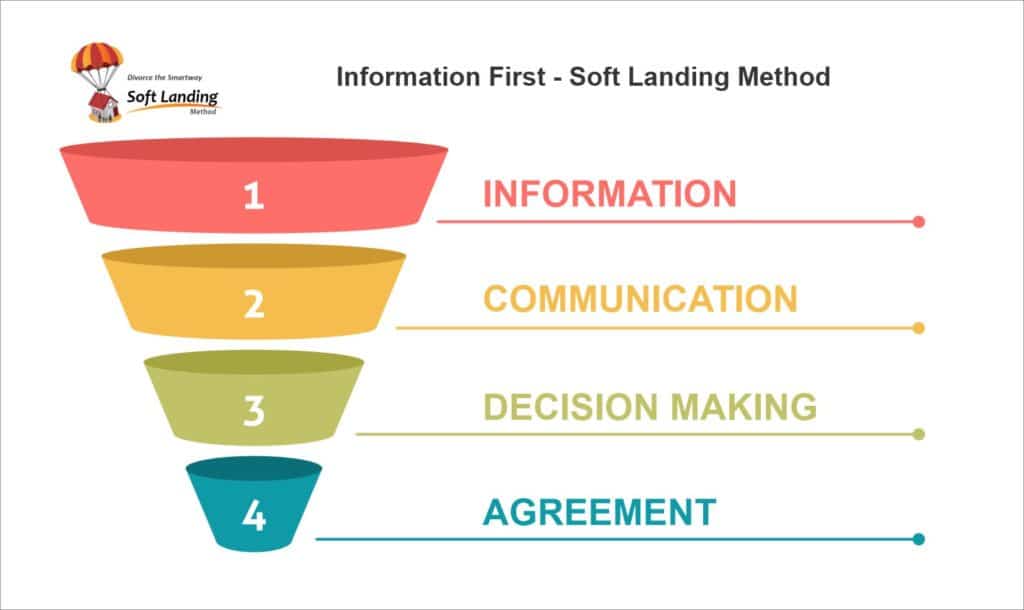
The Information First Model is an innovative approach in divorce mediation and settlement that prioritizes providing comprehensive information and resources to clients before they make any decisions or take any actions. This model emphasizes the importance of understanding all aspects of the divorce process, including financial implications, legal requirements, and emotional considerations, to empower individuals to make informed choices.
Get Acquainted Call
Do you want a Soft Landing?
Have a few questions?
Learn More:
Schedule a 15-Minute Complimentary Call
Ken S, Maynard CDFA Acc.FM

Profile
Becoming a Certified Divorce Financial Analyst and Mediator was more than a professional choice for me; it was a deeply personal journey. In 2007, I navigated the family court system myself, an experience that was both challenging and enlightening. This journey inspired me to use my financial expertise to assist others facing similar situations. Growing up with practical money management skills from my family’s agribusiness, I further honed my abilities in Real Estate restructuring and as an analyst at two of Canada’s largest mutual fund managers.
I am dedicated to empowering parties to make informed decisions, recognizing that multiple solutions exist for every dilemma during the settlement process. My approach is rooted in patience and thoroughness, ensuring that every voice is heard.
I offer a comprehensive suite of services, leaving no stone unturned in addressing your divorce financial analysis and mediation needs. From information gathering to analysis, settlement negotiations, and document drafting, I guide you through every step of the way. Using an interest-based negotiation approach, I tailor my services to meet each couple’s unique needs.
What truly sets my services apart is our proprietary Soft Landing Divorce Settlement Method. This method is not just a tool but a testament to our commitment to your well-being. It is designed to facilitate smoother and more amicable settlements, ensuring that both parties feel heard and their needs are met.
The process begins with a “Get Acquainted” call, often conducted jointly but available individually. During this call, I will explain my hybrid fee schedule, which combines a flat fee for certain services and an hourly rate for others, and address any questions about the Soft Landing Separation and Divorce Settlement Method. Upon agreement, we proceed with the mediation process.
Many clients initially dismiss mediation due to preconceived notions or external influences. However, mediation invariably adds value to the separation process by narrowing issues and testing settlement perceptions against reality.
I am available most weekdays and work with couples across Ontario via Zoom video conference. Clients can also choose to meet with one of my highly trained associate mediators at various locations throughout the province.
Away from the Office
I have three young adult children who have grown into fine, productive members of society. My oldest is a Private Equity Banker, my middle child is a Nurse, and my youngest is a Digital Marketer. They were raised with strong values that give them the resiliency to navigate their parents’ separation at a young age and build quality personal relationships.
Away from the office, I love to chill out by taking my beach chair to our local beach. With neighbors and friends, we set our chairs at the water’s edge and let the waves roll in, enjoying conversations about nothing overly important. My hobby is digital marketing, and I take great enjoyment in growth hacking my business and sharing what I learn with my Digital Marketer daughter.
I actively attend and contribute to the Institute of Divorce Financial Analysts and the Ontario Association of Family Mediation
Links to additional resources you may find useful
- Divorce recovery support groups in Barrie, Ontario – DivorceCare is a divorce recovery support group where you can find help and healing for the hurt of separation and divorce.
- Separation and Divorce : Simcoe County, ON – Directory of Separation and Divorce Services, Help and Support for Simcoe County, ON including Barrie, Orillia, Collingwood and Penetanguishene.
- Divorce Support Groups in Barrie, ON – Find Divorce Group Therapy and Support Groups for Divorce in Barrie, Ontario. Psychology Today makes it easy to find and connect with the best therapy.
- Separation and Divorce : Self-help, Mutual Aid and Support – Self-help, Mutual Aid and Support Groups in Barrie, ON. 128 Anne Street South, Barrie, ON, L4N 6A2. 705-725-0363.
- New Path now offering divorce support program for parents – This program is for parents who are going through separation or divorce and need some support in resolving conflicts in their relationships.
- Separation and Divorce Counselling and Therapy – Counselling and therapy services for couples going through separation and divorce.
- Séparation et divorce : Simcoe County, ON – Counsellors and Therapists are available for support with feelings of isolation, loss, strained relationships, and work challenges.
- New Beginnings Support Group, Online/Web Service – Support for widowed, separated, or divorced persons, 19 years and older. Available online for Ontario residents
- Find Divorce Therapists and Psychologists in Barrie, ON – Services including collaborative divorce, reunification, parenting evaluations, couples counselling, and blended family support.
- The Role of Family Mediator in Barrie, Ontario Divorce Cases – DTSW provides family mediation in Barrie with the Soft Landing Separation and Divorce Settlement Method.
- Divorce therapists in Barrie, Ontario, Canada – Reflection Centre’s dedicated team supports individuals through the challenging experience of separation or divorce.











































FLIC Office located by the Family Court Office Inside the Barrie Courthouse