
Divorce with a Narcissist: Navigating with a Strategy
Get Acquainted Call
Do you want a Soft Landing?
Have a few questions?
Learn More:
Schedule a 15-Minute Complimentary Call
How to Negotiate a Divorce Settlement With A Narcissist
Divorcing A Narcissist can be one of the most challenging experiences, especially in Ontario, where understanding the intricacies of personality disorders such as Narcissistic Personality Disorder (NPD) is crucial. This guide delves into expert strategies for Disentangling from a Narcissist, providing practical advice on how to navigate this complex situation effectively. From crafting a detailed written parenting plan to dealing with the mental health conditions associated with narcissism, our comprehensive overview covers it all.
When facing a narcissist, expect to encounter behaviours driven by a limitless sense of self-importance, success, and brilliance. Narcissists often require constant feeding of their ego and may employ anger, threats, and manipulation tactics to maintain control. Understanding these dynamics and preparing mentally and physically are vital steps in protecting yourself and your interests.
A successful divorce strategy includes positive reinforcement, limiting social media interactions, and leveraging text messages as evidence. Working with a knowledgeable family law attorney who understands personality disorders, including bipolar and borderline personality disorders, is essential. Our expert strategies will help you navigate this difficult journey, ensuring you are well-equipped to handle the unique challenges of divorcing a narcissist.
Continue reading to explore detailed information and gain the tools you need to manage this process confidently and clearly.
10 Red Flags You Dealing with a Narcissist
Nothing will ever be their fault.
They will never be there for you no matter what.
They will always be the victim.
They will never see the good in you in things you do.
It’s always their way, or no way.
They will never admit to being wrong.
They will be angry with you every single day.
They will give you the silent treatment, or cold shoulder you for days or weeks at a time.
When you leave, they’ll spread false stories and rumors about you.
You will start to feel so incredibly drained and hopeless.
Divorce with a Narcissist: Reaction to Divorce
Narcissistic Behavior During Divorce
Gaslighting Tactics
A narcissist employs gaslighting to manipulate during divorce proceedings. Gaslighting involves manipulating someone into questioning their own reality, thereby gaining control over them.
Manipulation and Deceit
Narcissists frequently resort to blatant lying, denying any evidence of wrongdoing, and projecting their actions onto others. They are masters of manipulation, often labeling their spouse as dishonest and unfaithful, even when such accusations are baseless.
Self-Centered Worldview
Narcissists are entirely self-focused. They rarely consider anyone else’s needs or the morality of their actions, as long as it serves their interests.
Emotional Instability
Engaging with a narcissist is like being on an emotional roller-coaster. They might promise lifelong commitment one day and act as if you don’t exist the next. Their extreme emotional fluctuations are challenging to comprehend and deal with.
Manipulative Affection
When a narcissist senses they are losing control, they may increase their demonstrations of love and affection. This is a strategy to lure you back in and prevent you from leaving. However, once they feel secure again, their negative behavior typically resumes.
Silent Treatment
Narcissists often use the silent treatment to punish or coerce their partners. This tactic is particularly prevalent when they do not get their way or when someone asserts themselves against the narcissist’s wishes.
Verbal Assaults
In the face of opposition, narcissists may escalate to verbal assaults, accusing their partner of having malicious intentions. These threats are intended to intimidate and manipulate, although they rarely lead to actual harm.
Narcissistic Tactics in Divorce
A common strategy narcissists employ during divorce proceedings involves financial manipulation. Welcome, I’m Ken Maynard, your dedicated divorce mediator and Certified Divorce Financial Analyst. I specialize in supporting you through the challenges of divorcing a narcissist, whether it concerns divorce, separation, or co-parenting.
Financial Manipulation
Transparency and fairness are paramount in the financial aspects of divorce or separation. It is essential to fully disclose, uncover, and reveal all financial assets. However, a narcissistic spouse might resist this, seeking to obscure assets and prolong negotiations.
Narcissists often use tactics like saying, “We don’t need lawyers, let’s save the money,” or “You know the finances; just propose a settlement.” Their goal is to bypass fair disclosure and manipulate the situation to their advantage, attempting to exhaust you through endless disputes and pressure you into accepting an unfavorable deal.
Narcissists in Divorce Negotiations
Equipped with these manipulative strategies, narcissists approach divorce settlements in a similarly adversarial manner. They will likely delay proceedings, engage in frequent disputes, gaslight, and make baseless accusations to wear you down and force you to concede.
Understanding the dynamics and preparing accordingly,
There are three main reasons why a person exhibiting narcissistic traits may become highly erratic during a separation or custody dispute. Understanding these reasons is crucial, as it can significantly help in minimizing their negative impact on you. All three reasons are tied to the narcissistic individual’s perception of loss or defeat.
Loss of Control
The first reason is the perceived loss of control. The narcissistic spouse can no longer dictate the narrative of your relationship, nor can they leverage societal pressures to maintain their hold. This lack of control often extends to the management of social media posts, where the narcissist may use emails and text messages to try to regain control or manipulate perceptions.
Fear of Failure
The second point centers on the fear of failure. No one likes to admit failure in marriage, but for someone with narcissistic personality disorder (NPD), a Separation from a Narcissist can feel catastrophic. This need to always appear successful is deeply ingrained in their inflated sense of self.
Jealousy and Possessiveness
Lastly, the third reason involves the narcissist’s intense jealousy and possessiveness. To them, you are akin to property, and the thought of you being with someone else can trigger extreme reactions. This scenario is often a battleground for issues like joint legal custody and parenting time, which require negotiations and written parenting plans to ensure clarity and boundaries.
During these times, it is important to consult with an experienced family lawyer who understands the nuances of dealing with a narcissistic ex. They can provide valuable advice on managing communication through controlled channels and ensuring that important documents, such as court orders and financial information, are handled correctly.
Setting firm boundaries is essential in any dealings with a narcissistic individual. Document everything whenever possible, and consider maintaining records of all text messages, emails, and social media interactions. An experienced divorce mediator can guide you through the complexities of the divorce process, including the establishment of a parenting plan and the safeguarding of mental health for both you and your children.
By understanding these dynamics and preparing accordingly, you can protect yourself and navigate the divorce process with more confidence and less stress.
Divorce with a Narcissist: Preparing to Divorce
Emotional Impact of Divorce
Undergoing the divorce process can be daunting and emotionally taxing, particularly when you witness the disintegration of your family. Rather than blaming yourself, it’s crucial to understand the factors that initially attracted you to your narcissistic spouse. This introspection is key to personal growth and future relationship success.
Narcissistic Values in Relationships
Narcissists view every aspect of their life, including romantic relationships, children, and material possessions, as trophies to be won. Their approach to relationships is transactional, where everything is valued only for its contribution to their image or personal gain.
Deceptive Charm of a Narcissist
Initially, a narcissist may present a charming and romantic facade to win over their partner. However, their less appealing traits gradually emerge, revealing the true depth of their narcissistic personality disorder. This shift often leaves partners feeling deceived and undervalued.
Moving Beyond Blame
Realizing that you were manipulated by someone with a personality disorder npd should not be a source of self-blame. Understanding the signs of a narcissistic personality allows you to move forward and prevent similar situations in the future. Recognizing these red flags is crucial for anyone involved with a person displaying narcissistic traits.
Empowerment Through Knowledge
Although the realization of the true nature of your narcissistic ex can be painful, it empowers you to make informed decisions about your future relationships. By acknowledging the difficulties you’ve faced, you can take proactive steps towards recovery and establishing a healthier life post-divorce.
Legal and Psychological Support
Engaging with an experienced family lawyer and seeking mental health support are beneficial steps in handling divorce proceedings involving a narcissistic spouse. These professionals can provide the necessary guidance and support to navigate the complex emotional and legal challenges posed by narcissistic behavior.
Documentation and Legal Preparedness
Document everything during your divorce proceedings to protect yourself against the manipulative tactics narcissists may use. Keeping detailed records, including text messages and emails, can help safeguard your interests, especially concerning child custody and parenting plans.
Building a Support Network
It’s also vital to maintain strong connections with family and friends who can provide emotional support and help reinforce your narrative against any slander from your narcissistic ex. By sharing your experiences openly, you can counteract any misinformation and gain additional perspective and strength from your support network.
Table of Contents
- How to Negotiate a Divorce Settlement With A Narcissist
- 10 Red Flags You Dealing with a Narcissist
- Divorce with a Narcissist: Reaction to Divorce
- Narcissistic Behavior During Divorce
- Understanding the dynamics and preparing accordingly,
- Divorce with a Narcissist: Preparing to Divorce
- Divorce with a Narcissist: FAQ
- How to Divorce a Narcissist
- 1) Choosing the Right Mediator:
- 2) The Futility of Rational Discussion:
- 3) Meticulous Documentation:
- 4) Leveraging Support Networks:
- 5) Strategic Planning Against Narcissistic Divorce Tactics
- Strategies for Effective Negotiation
- Direct Negotiations Ineffective
- Effective Communication Techniques
- What is the Narcissist's Kryptonite
- Mediation With The Narcissist – Must Do
- How to Divorce a Narcissist - 11 Key Takeaways
- Final Thoughts
- At DTSW
- Get Acquainted Call
- External links that may interest you
- The path you take
- What about Self-Representation?
- The resolution value ladder
Divorce with a Narcissist: FAQ
Set firm boundaries, document everything, and work through legal representatives when divorcing a narcissist
Divorcing a narcissistic spouse requires a strategic, well-protected approach to safeguard your emotional and legal interests. The key is maintaining strong boundaries while navigating their manipulative tactics and potential emotional warfare.
- Keep all communication in written format (email or text) for documentation
- Work through your lawyer or mediator whenever possible
- Avoid engaging in emotional arguments or defending yourself
- Create a support network of professionals (therapist, legal counsel, financial advisor)
- Document all interactions and save evidence of problematic behaviour
- Focus on practical outcomes rather than emotional closure
- Set clear boundaries and maintain them consistently
Remember that narcissists often escalate manipulative behaviour during divorce proceedings. Stay focused on your goals, maintain emotional distance, and rely on professional guidance to reach a resolution.
Divorcing a narcissist typically involves intense conflict, manipulation tactics, and requires strong professional support.
Ending a marriage with a narcissistic spouse presents unique challenges that demand careful preparation and emotional fortitude. These individuals often view divorce as a personal attack, leading to prolonged and complicated proceedings.
Common challenges you may encounter include:
- Emotional manipulation and attempts to control the narrative
- Deliberate delays and refusal to cooperate with legal processes
- Financial deception or hiding of assets
- Aggressive litigation tactics and false accusations
- Using children or mutual friends as pawns
To protect yourself, maintain strict documentation of all communications, work with experienced legal counsel, and establish a strong support network including a therapist. Focus on factual, business-like interactions and avoid emotional engagement whenever possible.
Successfully divorcing a narcissist requires strategic communication and firm boundaries while protecting your interests
Navigating divorce with a narcissistic spouse requires careful planning and a strategic approach. The key is understanding their psychological patterns and using that knowledge to achieve a resolution while protecting yourself.
Here are effective strategies for handling divorce with a narcissistic partner:
- Document all communications and keep detailed records of interactions
- Work through a qualified divorce lawyer who has experience with high-conflict personalities
- Appeal to their desire for public image by framing divorce as a mutually beneficial solution
- Avoid emotional confrontations and maintain strictly business-like communications
- Consider mediation services with professionals experienced in personality disorders
- Protect your financial interests by securing important documents and assets early
Remember that your safety and well-being come first. Consider working with a counsellor or therapist who can help you maintain emotional stability throughout the process.
Narcissists frequently experience divorce due to their destructive relationship patterns and inability to maintain healthy partnerships.
Individuals with narcissistic personality disorder (NPD) often face relationship breakdowns leading to divorce due to their characteristic behaviours and traits. The divorce process with a narcissistic spouse typically presents unique challenges:
- They may attempt to manipulate the legal proceedings for personal gain
- Often engage in emotional warfare and financial control tactics
- Frequently refuse to negotiate or compromise reasonably
- May use children or shared assets as leverage
Working with an experienced divorce lawyer and mental health professional is essential when divorcing a narcissistic partner. These professionals can help establish boundaries and protect your interests throughout the separation process.
Prepare strategically by documenting everything, securing assets, and building a strong professional support team before filing for divorce from a narcissist.
Divorcing a narcissistic spouse requires careful preparation and strategic planning to protect yourself legally, financially, and emotionally. Success depends on taking specific protective measures before announcing your intentions.
- Gather and secure all financial documentation, including bank statements, tax returns, investment accounts, property deeds, and retirement plans
- Document all interactions and keep detailed records of communications, incidents, and parenting matters
- Build a professional support team including:
- A divorce lawyer experienced with high-conflict cases
- A qualified mental health professional
- A certified financial advisor
- Create separate bank accounts and secure important personal documents
- Establish a private communication channel and support network
- Develop a safety plan and secure living arrangements if needed
Set firm boundaries, document everything, and communicate through legal representatives when negotiating with a narcissistic ex-spouse.
Successfully negotiating with a narcissistic partner during divorce requires a strategic approach focused on protecting your interests while minimizing conflict. The key is maintaining emotional distance and establishing clear, documented communication channels.
- Always communicate in writing through email or legal messaging platforms
- Keep a detailed record of all interactions and agreements
- Work with a skilled divorce lawyer experienced in high-conflict cases
- Avoid engaging in emotional arguments or personal discussions
- Set clear boundaries and deadlines for all negotiations
- Focus solely on facts and legal matters, not emotional appeals
- Consider using a professional mediator for face-to-face meetings
Remember to prioritize your well-being and legal interests throughout the process. Stay focused on achieving a fair settlement rather than winning emotional battles or seeking validation.
Divorcing a narcissist may be necessary for your mental health and personal wellbeing when the relationship becomes harmful.
Making the decision to divorce a narcissistic spouse is often challenging but can be essential for self-preservation. These relationships typically involve emotional manipulation, gaslighting, and psychological abuse that can severely impact your mental health and self-worth.
Before proceeding with divorce, consider these important factors:
- Document all interactions and keep detailed records of abusive behaviour
- Build a strong support network of family, friends, and professionals
- Secure your finances and important documents
- Work with a qualified divorce lawyer experienced in high-conflict cases
- Seek support from a mental health professional who understands narcissistic abuse
Remember that divorcing a narcissist may be more complicated than a typical divorce, but prioritizing your wellbeing is crucial for long-term recovery and happiness.
Successfully divorcing a narcissist requires strategic planning, thorough documentation, and strict emotional boundaries.
Navigating a divorce with a narcissistic spouse demands a carefully structured approach to protect your interests and maintain control of the proceedings. Success requires a combination of legal preparation and personal fortitude.
- Maintain detailed documentation of all communications, financial records, and interactions
- Work with a lawyer experienced in high-conflict divorces
- Implement the grey rock method by remaining neutral and unemotional during interactions
- Communicate only through official channels like lawyers or court-approved apps
- Establish a strong support network of professionals, including a therapist and financial advisor
- Focus on facts rather than emotional arguments when presenting your case
- Set clear boundaries and never engage in private negotiations outside legal channels
Remember that narcissists often attempt to prolong proceedings and create drama. Stay focused on your goals and rely on your legal team to handle confrontations professionally.
Prepare thoroughly and prioritize safety when requesting divorce from a narcissistic spouse
Divorcing a narcissistic partner requires strategic planning and strong boundaries to protect your wellbeing. Before initiating the conversation, ensure you have a comprehensive support system and safety plan in place.
- Consult with a qualified divorce lawyer privately before any discussion
- Gather important financial documents and personal records in a secure location
- Set up a separate bank account and emergency fund
- Build a support network of trusted friends, family, and mental health professionals
- Choose a safe, public location for the conversation
- Keep communication brief, direct, and documented
- Prepare for potential emotional manipulation or retaliation
Remember to prioritize your safety and well-being throughout the process. Maintain firm boundaries and communicate through legal representatives when possible to minimize direct conflict and protect your interests.
Narcissists typically respond to divorce with intense emotional manipulation, rage, and controlling behaviours
When faced with divorce, a person with narcissistic personality traits often displays predictable yet challenging patterns of behaviour. Their deep-seated fear of abandonment and loss of control typically triggers extreme reactions.
- Initial denial and dismissal of divorce proceedings
- Attempts at emotional manipulation through guilt, threats, or love bombing
- Aggressive smear campaigns against their spouse
- Using children or shared assets as bargaining tools
- Deliberately prolonging legal proceedings for maximum control
- Alternating between rage and false promises of change
Protecting yourself during this process requires maintaining firm boundaries, documenting all interactions, and working with experienced legal professionals who understand narcissistic behaviour patterns.
Yes, specialized divorce lawyers exist who have expertise handling cases involving narcissistic personality traits
Many family law practitioners have developed specific expertise in managing divorces involving high-conflict personalities and narcissistic behaviour patterns. These specialized lawyers understand the unique challenges of dealing with manipulation, gaslighting, and emotional abuse that often occur in these cases.
These legal experts typically offer:
- Strategic guidance for documenting and managing manipulative communications
- Experience with parallel parenting plans for custody arrangements
- Knowledge of protective court orders and enforcement mechanisms
- Understanding of how to maintain professional boundaries during proceedings
- Expertise in gathering evidence to counter false narratives and allegations
Professional support services and specialized guidance are essential when divorcing a narcissistic spouse
Divorcing a narcissistic partner requires a comprehensive support network and strategic approach. Having the right resources can significantly impact your divorce outcome and emotional well-being.
- Legal Support: Specialized family lawyers experienced with high-conflict divorces and narcissistic behaviour patterns
- Mental Health Resources: Qualified therapists and counsellors who understand narcissistic personality disorder and trauma
- Financial Guidance: Certified Divorce Financial Analysts (CDFA) to protect assets and ensure fair settlements
- Support Groups: Both online and in-person groups for sharing experiences and coping strategies
- Documentation Tools: Apps and systems for recording interactions and maintaining organized records
Working with professionals who understand narcissistic divorce dynamics helps protect your interests while maintaining clear boundaries throughout the process. A coordinated team approach typically yields the best results for your legal, financial, and emotional protection.
Establish strong legal protection, maintain detailed records, and work with experienced professionals when divorcing a narcissistic spouse
Divorcing a narcissistic partner requires a strategic approach to protect your legal, financial, and emotional interests. A comprehensive protection plan is essential to navigate the challenging dynamics and secure a fair outcome.
- Document all interactions and keep detailed records of communications, financial transactions, and incidents
- Work with a qualified divorce lawyer who has experience handling high-conflict cases
- Establish a support network including a therapist, financial advisor, and trusted friends
- Communicate only through official channels like lawyers or court-approved messaging systems
- Secure important documents, financial records, and personal belongings in a safe location
- Set firm boundaries and avoid direct confrontations or emotional negotiations
- Consider hiring a divorce financial analyst to protect your assets and ensure fair division
Remember to prioritize self-care and maintain professional relationships with all parties involved. Working through proper legal channels helps minimize manipulation and ensures your interests remain protected throughout the divorce process.
Divorcing a narcissist requires strategic planning, professional support, and strong emotional boundaries
Navigating a divorce with a narcissistic spouse in Canada presents unique challenges due to their manipulative tendencies and difficult behaviour patterns. Understanding how to protect yourself legally and emotionally is essential for achieving a fair settlement.
Here are critical steps to consider when divorcing a narcissist:
- Document all communications and interactions thoroughly
- Work with a qualified family law attorney experienced in high-conflict divorces
- Establish a support network including mental health professionals
- Secure important financial documents and personal records early in the process
- Set firm boundaries for communication, preferably through legal representatives
- Consider requesting parallel parenting arrangements if children are involved
Working with professionals who understand narcissistic personality patterns can help protect your interests and maintain your well-being throughout the divorce process. Consider engaging a divorce financial analyst and family mediator to ensure comprehensive support during this challenging transition.
Divorcing a narcissist requires strategic preparation, documentation, and strong emotional boundaries
When divorcing a narcissistic spouse, protecting yourself legally, emotionally, and financially becomes crucial for a successful outcome. A methodical, well-documented approach helps maintain control during this challenging process.
- Gather and secure all important documents including financial records, communications, and legal papers
- Build a support network of mental health professionals, trusted friends, and experienced legal counsel
- Establish clear communication boundaries – use email or a divorce app for all interactions
- Document all interactions and keep detailed records of parenting time and financial transactions
- Protect your digital privacy by changing passwords and securing devices
- Create a separate financial safety net including new bank accounts and credit cards
- Practice emotional detachment techniques through counselling or therapy
Remember that narcissists often escalate manipulative behaviour during divorce. Stay focused on facts rather than emotions, and always communicate through proper legal channels. Consider working with professionals who have experience handling high-conflict divorces.
Divorcing a narcissist typically involves five distinct stages: preparation, filing, negotiation, litigation, and recovery
Ending a marriage with a narcissistic spouse requires careful planning and professional support to navigate the complex emotional and legal challenges. The process often takes longer than typical divorces due to the narcissist’s tendency to create conflict and resist resolution.
- Preparation Stage: Gather documentation, secure finances, and build a support network before announcing divorce intentions
- Filing Stage: Work with legal counsel to file paperwork and establish boundaries for communication
- Negotiation Phase: Expect resistance and manipulation tactics while working through property division and custody arrangements
- Litigation Process: Be prepared for court proceedings if mediation fails, as narcissists often refuse reasonable settlements
- Recovery Period: Focus on healing and establishing new boundaries after the divorce is finalized
Working with experienced professionals, including a family law specialist and mental health counsellor, is crucial for protecting your interests and maintaining emotional well-being throughout the process.
Divorcing a narcissist requires strategic planning, strong boundaries, and professional support to manage manipulation tactics and protect your interests.
Ending a marriage with a narcissistic spouse presents unique challenges due to their characteristic behaviours of manipulation, control, and lack of empathy. The process typically requires careful preparation and professional guidance to ensure your emotional and financial protection.
- Document all communications and keep detailed records of interactions
- Work with a qualified divorce lawyer experienced in high-conflict cases
- Establish firm boundaries and communicate only through legal channels
- Protect your financial assets and gather important documentation early
- Seek support from a mental health professional to maintain emotional stability
- Consider parallel parenting strategies if children are involved
- Focus on long-term goals rather than reactive responses to provocations
Working with professionals who understand narcissistic personality patterns can help streamline the divorce process and protect your interests while minimizing conflict and emotional trauma.
How to Divorce a Narcissist
How to win in a divorce with a narcissist
1) Choosing the Right Mediator:
Understanding Personality Disorders
Personality disorders, such as narcissistic personality disorder, are deeply ingrained and vastly different from behavioural disorders, which are often superficial and temporary. It is crucial to address such personality disorders seriously within the legal framework of a divorce.
The Role of Specialized Mediators
Experienced mediators adept in handling cases involving narcissistic spouses are critical. They understand the complexities of narcissistic behaviour and employ strategies to secure favorable outcomes in divorce settlements. It is also advisable to consult an experienced family lawyer for legal guidance throughout the mediation process.
With a knowledgeable mediator, navigating the divorce process with a narcissistic spouse becomes significantly more manageable. They are skilled in identifying and countering the tactics narcissists use in legal settings, ensuring you don’t fall victim to manipulation.
2) The Futility of Rational Discussion:
Challenges in Communication
Engaging in logical discussions with a narcissist often proves fruitless, as they are typically oblivious to reason. Attempting to resolve conflicts outside of court with a narcissist can lead to frustration and wasted efforts.
Be prepared for deflections and defensive behaviours during discussions. Narcissists may distort logical arguments, turning the conversation to their advantage without you realizing the shift. This behaviour underscores the importance of having a mediator who specializes in narcissistic behaviour to manage communications effectively.
3) Meticulous Documentation:
Importance of Accurate Records
Narcissists are known to twist facts; therefore, documenting every interaction meticulously is essential. Record all relevant communications, including emails, text messages, and social media posts, to maintain a clear and factual account of all proceedings. This thorough documentation will ensure all parties are aligned and prevent the narcissist from creating mischief.
4) Leveraging Support Networks:
Engaging Family and Friends
A narcissistic ex may attempt to tarnish your reputation among shared acquaintances. It is crucial to involve your close contacts early, providing them with the facts and garnering their support. By presenting your side of the story effectively, you can counteract any negative portrayal by your ex.
Avoid emotional traps set by your narcissist ex, designed to shift accountability to you. By staying informed and supported, you can maintain your stance and navigate the divorce more effectively.
5) Strategic Planning Against Narcissistic Divorce Tactics
Setting Firm Boundaries
Your primary goal is to disengage from a relationship marred by narcissistic traits. Stand firm on your decision, focusing on creating a stable and healthy environment, especially if children are involved. This approach involves joint legal custody and a well-defined parenting plan to ensure the well-being of your children.
Regularly remind yourself of the reasons behind your decision to divorce, especially when facing emotional manipulation. Collaborate closely with your divorce attorney to cover all details and adhere to a strategic plan that safeguards your interests and those of your children.
Strategies for Effective Negotiation
Your Supportive Ally
As your divorce mediator and financial analyst, my primary goal is to empower and support you in the complex negotiations with a narcissistic spouse. Recognizing their potential to exploit the legal system is critical in developing a strong strategy.
Developing a Strategic Approach
I will guide you in establishing clear boundaries and firm positions on key issues, ensuring your voice is respected throughout the process. Together, we will create a detailed parenting plan, vital for protecting your and your children’s interests, especially when dealing with a narcissistic partner.
Legal and Financial Expertise
With expertise in divorce mediation and financial analysis, I am well-equipped to help you manage the financial nuances of your divorce. I’ll ensure thorough financial disclosure and equitable asset division, countering any manipulation by your spouse.
Communication and Documentation
Effective communication is essential. I will help you structure your interactions to avoid common pitfalls and ensure all communication is clear and documented. This method is invaluable in maintaining a factual record, critical in divorce proceedings.
Direct Negotiations Ineffective
Arguing with a narcissist often feels like a losing battle, and there’s a fundamental reason for that: narcissists typically aren’t invested in the dialogue or the details of the disagreement. Instead, their focus lies primarily on themselves and maintaining a power dynamic that puts them above others.
The Narcissist’s Focus
For a narcissist, the argument serves as a stage. Their primary concern is to shine the spotlight on themselves, turning any interaction into an opportunity to be the center of attention. They’re less interested in the substance of the argument and more concerned with how they appear in the moment.
Furthermore, narcissists aim to keep themselves mentally and emotionally ‘above’ anyone else involved. They achieve this by drawing you into the argument, engaging you, and ideally, seeing you become visibly flustered or upset. This isn’t just about winning an argument for them; it’s about reaffirming their position of control and superiority.
Power Dynamics
To a narcissist, every argument is essentially a tug-of-war for control. Your participation in this tug-of-war—picking up the metaphorical rope—gives the narcissist what they want: engagement, attention, and ultimately, power over the situation. If you choose not to engage, to not pick up that rope, the dynamic shifts. Without your participation in the conflict, the struggle for power they crave dissipates.
Finding Peace
Particularly in scenarios like co-parenting, where interactions are inevitable, the best strategy for dealing with a narcissist may simply be to disengage where possible. Not engaging with their attempts at drawing you into emotional conflicts is the most effective way to preserve your peace and maintain control over the situation.
In summary, to divorce a narcissist requires a keen understanding of what they seek from interactions. By choosing when and how to engage, you can navigate these challenging dynamics more effectively and with less personal turmoil.
Effective Communication Techniques
The JADE method is a valuable communication strategy designed to counter high-conflict individuals, including those with narcissistic personality disorder. JADE stands for “do not Justify, do not Argue, do not Defend, and do not Explain.” This technique bears similarities to Dr. Ramani’s DEEP method and is aimed at avoiding engagement in baiting tactics often employed by narcissists.
Understanding the JADE Method
The core principle of the JADE method is to remind you to not engage with the manipulative tactics narcissists often use. They may accuse you of stonewalling as a way to provoke you into justifying or explaining your actions, which can spiral into further conflict. Narcissists may use various forms of communication, like emails, text messages, and social media posts, to bait you into responses.
Common Misconceptions
It’s common to hear concerns that the JADE method only serves to further anger the narcissistic individual. However, it’s crucial to recognize that narcissists often choose to be angry—it’s a preferred state for them, almost like a pastime. Therefore, tailoring your behavior to avoid their anger is ineffective.
Setting Boundaries
Setting boundaries is essential, but with narcissists, it’s not about stopping their attempts to breach these boundaries; it’s about maintaining your stance when they inevitably try. Boundaries are effective not because they change the narcissist’s behavior, but because they empower you to enforce consequences consistently.
Emotional Regulation and Detachment
The success of the JADE method hinges on your ability to stay emotionally regulated and detached from the narcissist’s reactions. Your actions should not be influenced by the narcissist’s behavior. This detachment is crucial for maintaining mental health and ensuring that your responses are calculated and not reactionary.
By practicing the JADE method, along with consulting experienced family lawyers and mental health professionals if necessary, you can navigate the complexities of interactions with a narcissistic individual more effectively. This approach helps in both personal and legal contexts, such as during the divorce process or when establishing joint legal custody and parenting plans.
What is the Narcissist's Kryptonite
Just as Kryptonite weakens Superman, stripping him of his powers, the fear of embarrassment and loss of control in family court serves as a narcissist’s Kryptonite, undermining their perceived authority and self-image. As a mediator I use the narcissist’s fears to move them to a settlement out of court.
However, it is often best to steer clear of engaging a narcissist in family court. Once they learn they can sway and exploit the court system, your legal costs may escalate rapidly. As a result, you might be compelled to accept a less favorable settlement simply to stop the financial hemorrhage.
Mediation With The Narcissist – Must Do

When a narcissistic opposing party requests mediation, it is generally advisable to agree for several reasons, as it puts you in a position of control and empowerment.
- One Key benefit is that it prevents the opposing party from crafting a narrative that paints the other side as unreasonable. Instead, it allows them to feel like they’ve achieved something.
- Mediation is not just about settling, it’s a fact-finding mission. By attending, you can gather crucial information that might be difficult to obtain through other means, making you more informed and prepared.
- Access to Financial Disclosure: Mediation can provide an opportunity to obtain financial disclosures that the opposing party might not have readily provided otherwise.
- Identifying Pain Points: Mediation is a valuable tool to identify the opposing party’s specific pain points, which can be strategically used to your advantage later in court.
How to Divorce a Narcissist - 11 Key Takeaways
- Understand Narcissistic Behavior: Recognize manipulation tactics like gaslighting and deceit.
- Emotional Instability: Be prepared for erratic emotional behavior.
- Silent Treatment and Verbal Assaults: Expect and strategize against punitive silence and verbal attacks.
- Loss of Control: Anticipate resistance due to perceived loss of control.
- Fear of Failure: Acknowledge their fear of perceived failure in marriage.
- Jealousy and Possessiveness: Prepare for intense possessiveness and jealousy.
- Mediation Benefits: Engage with a skilled mediator familiar with narcissistic behavior.
- Firm Boundaries: Establish and maintain clear boundaries.
- Meticulous Documentation: Keep detailed records of all interactions.
- JADE Method: Use the JADE method (Justify, Argue, Defend, Explain) to avoid engagement in conflicts.
- Support Networks: Utilize support from family and friends to counteract negative portrayal.
Final Thoughts
Divorcing a partner with a narcissistic personality disorder can be a uniquely challenging and emotional journey. As a Divorce Mediator and Certified Divorce Financial Analyst, I emphasize the importance of approaching the divorce process with a clear strategy, utilizing the expertise of an experienced family lawyer and other professionals who understand the nuances of personality disorders like npd.
Drafting a detailed and written parenting plan early in the process helps ensure that parenting time and child custody decisions are made in the best interests of the children, not overshadowed by the contentious dynamics of the divorce. Opting for joint legal custody might be a beneficial arrangement, encouraging cooperative decision-making despite the complexities posed by a narcissistic spouse.
Throughout your interactions, document everything meticulously—from text messages and emails to social media posts and other digital communications. This not only protects you but also provides your attorney with the accurate details needed for your case. Narcissists may even manipulate communications to fit their narrative, so having an indisputable record can be your strongest defense.
Financial transparency is also critical. Ensure all financial information, important documents, and court orders are readily available and organized. Working with an experienced lawyer can help you navigate the often convoluted financial disputes and safeguard your financial future.
Maintaining your mental health and setting boundaries are paramount. Engaging regularly with a mental health professional can provide you the support needed to handle the stress and manipulation tactics often employed by a narcissistic ex. Stand firm on your decisions and maintain a level of emotional detachment whenever possible to protect your self-esteem.
While the journey may be fraught with challenges, remember that you are not alone. Consistently lean on your support network, stay informed, and keep communication lines open with your experienced family lawyer and mediator. With the right tools and support, you can navigate this difficult time and emerge with a resolution that respects your needs and the well-being of your children.
At DTSW
We understand that you’re navigating through a challenging time. Divorcing a narcissist can be a complex and emotionally draining process. But remember, you’re not alone. Our team of Family Mediators and Certified Divorce Financial Analysts at Divorce The Smart Way (DTSW) is here to support you.
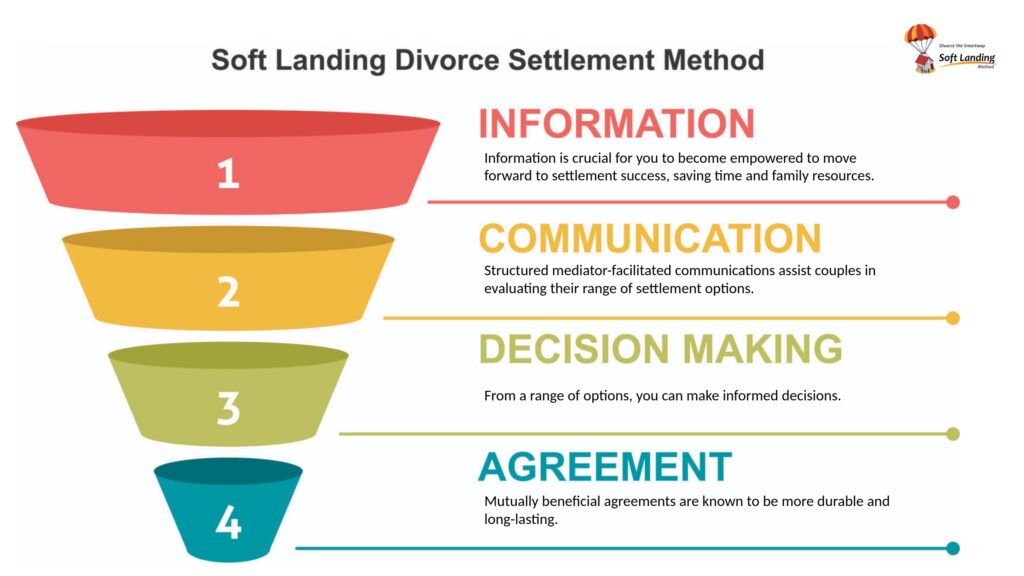
We’ve seen firsthand the struggles and uncertainties that come with such a situation. That’s why we’ve developed the Soft Landing Divorce Settlement Method. This approach is designed to guide you through the divorce process in a way that minimizes stress and conflict, while ensuring your interests are protected.
Our goal is to help you transition into the next phase of your life with confidence and peace of mind. We believe in empowering you with the right strategies and resources to navigate this journey effectively.
We invite you to take the first step towards a smoother separation process. Schedule a Get Acquainted Call with us today. During this call, we can discuss your specific circumstances and explore how our services can support you during this critical time.
Ready to take control of your future? Schedule a Get Acquainted Call now.
Get Acquainted Call
Do you want a Soft Landing?
Have a few questions?
Learn More:
Schedule a 15-Minute Complimentary Call
External links that may interest you
- Divorcing a Narcissist: 10 Tips From a Therapist – Emotional strategies for coping with a narcissistic ex-spouse.
- Divorcing a Narcissist & Getting Child Custody From Them – Tactics narcissists use and strategies to secure child custody.
- Divorcing a Narcissist: Breaking the Cycle of Coercive Control – Understanding narcissistic rage and its impact on divorce.
- How to Divorce a Narcissist: Strategies & Example – Practical steps to end a marriage with a narcissist and rebuild support systems.
- Divorcing a narcissist : r/LifeAfterNarcissism – Community experiences and advice on handling divorce from a narcissist.
- The Ultimate Guide to Divorcing a Narcissist – Comprehensive guide covering different types of narcissists and legal strategies.
- Divorcing a Narcissist: 7 Proven Legal Tactics – Legal strategies to handle divorce proceedings with a narcissistic spouse.
- Divorcing a Narcissist: The Lure, the Loss and the Law – Book offering insights into the emotional and legal aspects of divorcing a narcissist.
- Stages of Divorcing A Narcissist: Part 1 – Overview of the stages and challenges in divorcing a narcissist.
- Divorcing a Narcissist: 10 Top Coping Mechanisms – Coping strategies for dealing with a narcissist during divorce.
- Divorcing A Narcissist Will Be The Hardest Thing You Have To Do – Challenges and considerations when divorcing a narcissist.
- Divorcing Your Narcissist: You Can’t Make This Shit Up! – Book detailing personal experiences and legal advice for divorcing a narcissist.
since you’re here…
Do you value fair costs, compressed timelines, your well-being and a favourable outcome?
If you have children, are approaching retirement, or simply in the primary pursuits of life, no matter what your station in life, separation and divorce often presents some unique challenges. That said reaching a settlement should not break you financially or break your family. Like life, Separation and divorce also have their stages. The early decisions you make and the path you take are directly connected to the quality of your outcome.
The path you take
Let’s hear from Divorce Industry insiders about lawyers and litigation.
“Entering the litigation process forces people to take an adversarial stance because that’s the way the system is designed.”
“Because a court can only do so many things, the answers are impeaching us already. Has to be custody, has to be access, has to be amount of support, has to be division of assets, in a way that the law stipulates. So they’re very bounded by the results because a court can only order so many things.”
“Lawyers unfortunately because that’s their job, tend to reinforce that [adversarial stance]. When you have people who are hurt, who are in crises, who are afraid, who are worried, and they see it as a war. And that’s really dreadful for kids”
June Maresca – Family Court Judge
“The process requires people to bring out the worst in each other. My ex-husband is like this and like that, all the most horrible things. My ex-wife is like this and like that, it brings out the worst in people. So the other party reading that gets their back up and retaliates.”
“She said I knew that our marriage was broken, but after the litigation our family was broken. And it just, it broke my heart.”
Toni Pietrantoni – Family Law Lawyer
“Once you thrown mud at somebody and they throw mud back at you, it typically gets to the point where the hate level does not decrease, the hate level increases.”
“When I see litigation, it’s based on a binary system. You either win or you lose, or on an issue, you’re right or you’re wrong.”
Richard Bennett – Family Law Lawyer
“And at one point my mom said well you have to choose who you’re going to live with, me or your dad. And I couldn’t study for about a good two months and we had finals coming up, so it was difficult.”
Child of Divorce
“The time has come for a fresh conceptual approach to resolution of family disputes in Ontario”
Warren Winkler – Ontario Chief Justice 2007 – 2013
“The empirical evidence shows that it isn’t necessarily the separation and the divorcing of parents that creates the psychological and emotional damage in children, it is the conflict that happens afterwards.”
Julia Haasz – Family Law Lawyer
“The litigation process is expensive, time-consuming, and it’s not going to have the effect people think it’s going to have.”
Francine E. Van Melle – Family Court Judge
What about Self-Representation?
The family court system has seen a terrific increase in the number of self-represented litigants (self-reps, or SRLs) over the past few years. But what does it mean to be a self-rep? Judges and lawyers, as well as the system itself, are all struggling to understand who how to better accommodate self-reps in a system built upon the expectation of both parties having lawyers to act for them.
The National Self-represented Litigants Project revealed some disturbing figures. Over a period of 4 years and 3 months ending April 6, 2016, in Ontario Superior Court cases where there was one self-rep and one represented client, the self-rep won only 14% of the time and lost 73% of the time. (The remainder resulted in no orders or split orders.) While there are many explanations for this, it’s clear that a person without any legal help or assistance is facing an uneven playing field.
The resolution value ladder

The further down the resolution value ladder you start, the higher cost go, and the longer timelines extend. Bypass low-value processes and start with the high-value mediation process. Whether you have a settlement in mind and just need a separation agreement prepared or need assistance reaching a settlement, contain costs and conflict by working with a neutral third-party – mediator.
Learn more about Soft Landing Divorce Settlement Method
“Research tells us the greater the degree to which the parents own the outcome, the greater the likelihood they will actually follow through, and that reduces the conflict.”
“People are like snowflakes, families are like snowflakes. No two are the same. And so the benefit of a collaborative process, there is no rubber stamp, there is no template that anyone has to fit in to”
Gary Direnfeld Social Worker MSW, RSW

Ken Maynard CDFA, Acc.FM
I assist intelligent and successful couples in navigating the Divorce Industrial Complex by crafting rapid, custom separation agreements that pave the way for a smooth transition towards a secure future. This efficient process is achieved in about four meetings, effectively sidestepping the excessive conflicts, confusion, and costs commonly linked to legal proceedings. Clients have the flexibility to collaborate with me either via video conference or in-person through a DTSW associate at any of our six Greater Toronto mediation centers, located in Aurora, Barrie, North York, Vaughan, Mississauga, and Scarborough.