
Separation vs Divorce Ontario: Avoid Court Drama

Separation vs Divorce Ontario
Learn how to avoid court drama & protect your kids through legal options!
Understanding Your Options: Separation vs Divorce Ontario
Before diving into the specifics, let’s clarify what each option means in Ontario law.
What is Legal Separation in Ontario?
 Legal separation in Ontario means you and your spouse have decided to live apart while remaining legally married. Unlike some other jurisdictions, Ontario doesn’t require a formal court process to establish separation. You simply need to be living separate lives with the intention to separate.
Here’s what makes legal separation unique:
- You remain legally married – This means you can’t remarry someone else
- No court involvement required – If both parties agree on arrangements
- Reconciliation is possible – You can get back together without legal complications
- Benefits may continue – You might keep certain insurance or tax benefits
What is Divorce in Ontario?
 Divorce is the legal dissolution of your marriage. Once finalized, both parties are free to remarry and the marriage is permanently ended. In Ontario, you can file for divorce if:
- You’ve been separated for at least one year
- Your spouse committed adultery
- Your spouse treated you with physical or mental cruelty
The divorce process involves filing an application with family court, even if both parties agree to the terms.
Key Differences Between Separation and Divorce in Ontario
Understanding the differences between separation vs divorce in Ontario can help you make an informed decision:
Legal Status
Separation: You remain legally married to your spouse. While you live separately, the marriage bond still exists legally.
Divorce: Your marriage is legally terminated. Both parties are free to remarry and have no legal connection to each other.
Process Requirements
Separation: No court filing required if both parties agree. You can create a separation agreement outlining your arrangements.
Divorce: Requires filing an application with Ontario family court, regardless of whether you both agree to the divorce.
Reconciliation
Separation: You can reconcile and resume your marriage without any legal process.
Divorce: If you want to be married again, you’d need to remarry (which is legally possible since the previous marriage is dissolved).
Financial Implications
Separation: You may retain certain benefits like insurance coverage, tax benefits, or pension benefits that depend on marital status.
Divorce: These benefits typically end, and there may be more complex financial arrangements regarding asset division.
When Separation Might Be Right for You
Choosing separation over divorce in Ontario makes sense in several situations:
You’re Unsure About Ending Your Marriage
Separation gives you time and space to think things through. Maybe you and your spouse are going through a particularly difficult period, but you’re not ready to permanently end your marriage. This breathing room can provide clarity about whether your relationship can be salvaged.
Religious or Personal Beliefs
Some people have strong religious or personal beliefs about divorce. Separation allows you to live apart while honoring these beliefs.
Financial Benefits
If staying legally married provides significant financial advantages—such as health insurance coverage, tax benefits, or pension considerations—separation might be the practical choice.
You Need Time for Financial Planning
Sometimes the financial implications of divorce are complex. Separation can give you time to understand and plan for the division of assets, retirement accounts, or business interests.
The Case for Uncontested Divorce in Ontario
While separation has its benefits, uncontested divorce in Ontario often provides the most straightforward path forward for couples who’ve decided their marriage is over.
What is Uncontested Divorce?
An uncontested divorce in Ontario occurs when both spouses agree on all major issues, including:
- Child custody and access arrangements
- Child support and spousal support
- Division of property and assets
- Any other relevant matters
Benefits of Uncontested Divorce in Ontario
Faster Resolution: Uncontested divorce can be completed in just a few months, compared to contested divorces that can drag on for years.
Cost-Effective: Without lengthy court battles, legal fees are significantly lower. You’re not paying for extensive litigation or multiple court appearances.
Less Stressful: The collaborative approach reduces emotional strain on everyone involved, especially children.
Privacy: Your personal matters stay out of public court records and proceedings.
Better Post-Divorce Relationship: When you work together to resolve issues, you’re more likely to maintain a respectful relationship afterward—crucial when children are involved.
How Each Process Works in Ontario
The Separation Process
Step 1: Decide to live separately with the intention of separating.
Step 2: Address immediate concerns like where each person will live and temporary arrangements for children.
Step 3: Create a separation agreement covering:
- Child custody and access
- Child support
- Spousal support
- Division of property and debts
- Any other relevant matters
Step 4: Have the agreement reviewed by independent legal advisors (recommended but not required).
Step 5: Sign the agreement. No court filing is necessary unless disputes arise.
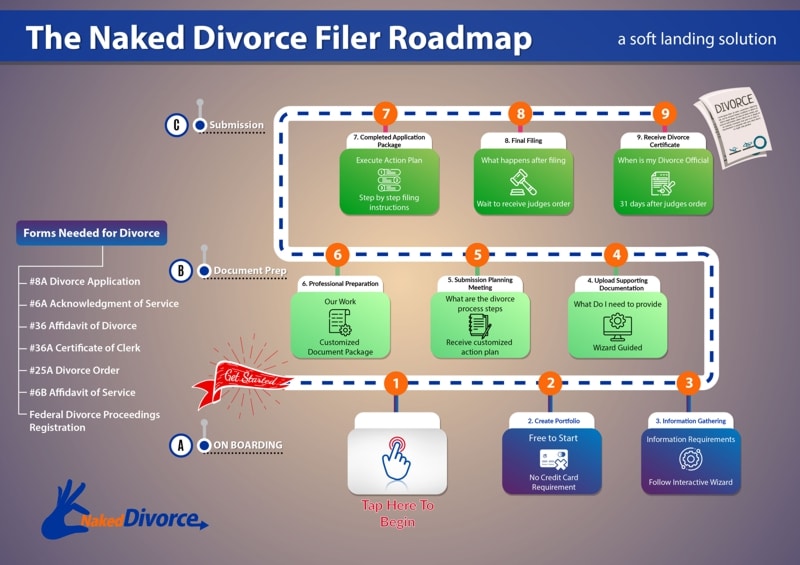
The Divorce Process
Step 1: Ensure you meet the requirements (one year separation, adultery, or cruelty).
Step 2: Gather necessary documents including marriage certificate, financial statements, and any separation agreements.
Step 3: File your application:
- Joint Application: If both spouses agree on all terms
- Application for Divorce: If there’s no agreement on some issues
Step 4: Serve documents on your spouse (if filing individually).
Step 5: Wait for processing and court review.
Step 6: Receive your divorce order and certificate.
Child Custody and Support: Same Considerations for Both
Whether you choose separation or divorce in Ontario, child-related matters are handled similarly:
Parenting Plans
Both processes require creating arrangements for:
- Where children will live
- Parenting time schedules
- Decision-making responsibilities
- How to handle disputes
Child Support
Child support obligations exist regardless of whether you’re separated or divorced. The amount is typically calculated using federal Child Support Guidelines based on the paying parent’s income and the number of children.
Protecting Your Children Through the Process
In dealing with Separation vs. Divorce, keeping your children’s best interests at heart is paramount. Both processes allow you to create stable, structured arrangements that minimize disruption to your children’s lives.
Common Misconceptions About Separation vs Divorce Ontario
Let’s clear up some confusion about separation and divorce in Ontario:
“You Need a Lawyer to Separate or Divorce”
Reality: While legal advice is always helpful, you don’t need a lawyer to separate or divorce in Ontario. Many couples successfully navigate these processes through mediation, collaborative approaches, or working with certified divorce specialists.
“Legal Separation Means You’re Divorced”
Reality: Legal separation does not mean you’re divorced. You remain legally married and cannot remarry until you go through the formal divorce process.
“You Must Be Separated Before You Can Divorce”
Reality: While one year of separation is the most common ground for divorce in Ontario, it’s not the only ground. Adultery and cruelty are other valid reasons for divorce.
“Contested Divorce is Your Only Option if You Disagree”
Reality: Even if you initially disagree on some issues, mediation and negotiation can often help you reach agreements that allow for an uncontested divorce in Ontario.
Financial Considerations: Asset Division in Ontario
Both separation and divorce involve important financial decisions that will affect your future:
Property Division
Ontario law generally entitles both spouses to an equal share of family property acquired during the marriage. This includes:
- The family home
- Vehicles
- RRSPs and pension plans
- RESPs for children
- Other investments and savings
Exceptions to Equal Division
Certain assets may not be divided equally:
- Property you owned before marriage
- Gifts or inheritances received by one spouse
- Assets excluded by a prenuptial agreement
- Increases in value of pre-marital property (in some cases)
Spousal Support
Both separation and divorce can involve spousal support arrangements. The amount and duration depend on factors like:
- Length of the marriage
- Each spouse’s income and earning capacity
- Age and health of both spouses
- Standard of living during marriage
- Childcare responsibilities
Making Your Decision: Practical Steps
When weighing separation vs divorce in Ontario, consider these factors:
Assess Your Situation Honestly
- Is reconciliation realistically possible?
- How do you both feel about the finality of divorce?
- What are your financial implications for each choice?
- How will each option affect your children?
Consider Your Timeline
- Separation can happen immediately when you decide to live apart
- Divorce requires waiting one year after separation (unless adultery or cruelty grounds apply)
Evaluate Your Cooperation Level
- If you can work together on major issues, uncontested divorce in Ontario might be your best option
- If cooperation is difficult, separation might give you time to work on communication
Think About Your Future Goals
- Do you want the possibility of reconciliation?
- Is remarriage important to you?
- How important is maintaining certain benefits of marriage?
The Role of Mediation and Professional Support
Whether you choose separation or divorce, professional support can make the process smoother:
Family Mediation
Mediators help couples:
- Communicate more effectively
- Explore creative solutions
- Reach mutually acceptable agreements
- Avoid costly court battles
Collaborative Divorce
In collaborative divorce, both parties work with specially trained professionals to resolve issues without going to court. This approach often works well for uncontested divorce in Ontario.
Certified Divorce Specialists
These professionals specialize in guiding couples through the divorce process efficiently and cost-effectively, focusing on collaboration and communication.
Emotional Considerations: Taking Care of Yourself and Your Family
Both separation and divorce are emotionally challenging processes. Here’s how to protect your well-being:
For You
- Seek support from friends, family, or counselors
- Take care of your physical health
- Give yourself time to process the changes
- Focus on what you can control
For Your Children
- Keep them out of adult conflicts
- Maintain routines as much as possible
- Reassure them that both parents love them
- Consider family counseling if needed
Statistics and Trends: What’s Happening in Ontario
Understanding current trends can provide perspective on your situation:
- Divorce rates in Canada have been steadily declining since 1991
- Many people are choosing longer separations before filing for divorce
- Collaborative and mediated approaches are becoming more popular
- More couples are opting for uncontested divorce in Ontario to avoid court drama
Documentation and Legal Requirements
For Separation
- Separation agreement (recommended but not required)
- Financial disclosure between spouses
- Documentation of arrangements for children
For Divorce
- Marriage certificate
- Divorce application (Joint Application or Application for Divorce)
- Financial statements
- Any existing separation agreements
- Proof of grounds for divorce (separation certificate, etc.)
When Court Involvement Becomes Necessary
While most separations and many divorces avoid court involvement, you may need court intervention if:
- You can’t agree on child custody arrangements
- There are disputes about property division
- One spouse won’t cooperate with the process
- There are concerns about domestic violence
- Complex financial matters require judicial decision
Moving Forward: Your Next Steps
Deciding between separation vs divorce in Ontario is deeply personal. Here’s how to move forward:
Take Time to Reflect
Don’t rush this decision. Consider all factors: emotional, financial, practical, and legal.
Gather Information
Understanding your rights and options helps you make informed decisions.
Seek Professional Guidance
Whether it’s a lawyer, mediator, or certified divorce specialist, professional guidance can help you navigate this complex process.
Focus on the Future
While this process is challenging, remember that both separation and divorce can lead to positive new chapters in your life.
Making the decision between separation vs divorce in Ontario involves weighing legal and personal factors, but it doesn’t have to be overwhelming. With the right information and support, you can choose the path that’s right for your family and move forward with confidence toward a brighter future.
Remember, this is just the beginning of a new chapter, not the end of your story. Whether you choose separation or divorce, you have the power to create a positive outcome for yourself and your family.
Legal separation maintains marriage status while allowing couples to live apart and retain certain benefits
A legal separation offers several advantages over divorce for couples who need time apart but aren’t ready to permanently end their marriage. This arrangement can be particularly beneficial for those who:
- Have religious or personal beliefs that conflict with divorce
- Want to maintain healthcare benefits and other marriage-related advantages
- Need time to work through relationship issues
- Wish to minimize the emotional impact on children
- Want to keep the option of reconciliation open
Unlike divorce, which permanently dissolves the marriage, a legal separation is reversible and allows couples to maintain their married status while living separately. This arrangement provides a structured way to establish boundaries and responsibilities while preserving the possibility of reconciliation.
Legal separation provides financial and legal protections while maintaining certain marriage benefits
A legal separation agreement creates clear boundaries and protections while allowing couples to live apart without divorcing. This formal arrangement helps safeguard both parties’ interests while preserving important benefits.
Legal separation offers several key advantages:
- Maintains access to healthcare coverage through a spouse’s insurance plan
- Preserves eligibility for social security benefits and pension entitlements
- Allows couples to continue filing joint tax returns if desired
- Establishes clear terms for property division, support payments, and child custody
- Provides a framework for reconciliation if couples wish to reunite
While less permanent than divorce, legal separation requires proper documentation through a qualified family law professional to ensure your rights are protected.
Legal separation provides formal financial protection and establishes clear rights and obligations between spouses
A legal separation agreement offers important financial protections that informal separation does not provide. Without one, you remain legally bound to your spouse’s financial obligations and decisions, potentially putting your assets at risk.
Key benefits of legal separation include:
- Formally establishes the date of separation which affects property division and support calculations
- Creates legally binding arrangements for asset division and financial responsibilities
- Protects you from being liable for new debts incurred by your spouse
- Ensures the separation period counts towards divorce requirements
- Provides clear documentation if the separation becomes contested later
Without legal separation, you may face challenges proving when the separation began and remain financially vulnerable during the period of living apart. Consulting a family law professional can help ensure your interests are properly protected.
Dating during legal separation is possible but requires careful consideration of legal implications
While technically allowed, dating during legal separation can have significant consequences for your divorce proceedings in Canada. Legal separation does not automatically give you freedom to date without potential repercussions.
- Your spouse may cite dating activities as evidence of adultery in divorce proceedings
- Dating could impact negotiations regarding property division and support payments
- Written agreements with your spouse about dating during separation can provide protection
- New relationships may complicate the emotional and legal aspects of your separation
It’s strongly recommended to consult with a family law professional before pursuing new relationships during your separation period. They can advise on specific risks and protections based on your situation.
Yes, couples can remain legally separated indefinitely without divorcing
Legal separation is a long-term option for couples who wish to live apart while remaining legally married. In Canada, spouses can maintain a status of living separate and apart indefinitely, even while sharing the same residence for practical reasons like financial constraints or co-parenting.
- Couples can be considered legally separated while living under the same roof
- Spouses must maintain separate lives without marital relations
- Financial and childcare responsibilities can continue to be shared
- Brief reconciliation periods up to 90 days are permitted under the Divorce Act
- The separation remains valid as long as there is no resumption of a marriage-like relationship
This arrangement offers flexibility for couples who prefer separation over divorce due to religious beliefs, financial considerations, or family circumstances.
Legal separation basic costs range from $0 for informal separation to $2,000+ for professional assistance
The initial act of legally separating from your spouse is free of charge, as there’s no formal court filing required to live apart. However, creating a formal separation agreement typically involves costs:
- DIY separation agreement: Only basic documentation costs
- Lawyer-drafted agreement: $1,000-$3,000 depending on complexity
- Mediation services: $500-$2,500 for professional assistance
- Legal consultation fees: $300-$500 per hour if needed
While you can separate informally without cost, investing in professional legal assistance helps ensure your rights are protected and all important matters like property division, support payments, and parenting arrangements are properly documented.
Legal separation in Ontario does not require formal court filing or documentation
In Ontario, legal separation occurs automatically when spouses begin living apart with the intention to separate. Unlike divorce, there is no formal filing process or court application required. However, couples may choose to create and file a separation agreement with the court to document important decisions about:
- Child custody and support arrangements
- Division of property and assets
- Spousal support obligations
- Living arrangements and expenses
While filing a separation agreement is optional, having a written document can provide legal protection and clarity for both parties during the separation period.
Divorce terminates a marriage legally, while separation maintains the marriage status with physical separation.
A legal separation and divorce serve different purposes in Canadian family law. While both arrangements allow couples to live separately, they have distinct legal implications:
- In a legal separation, couples remain legally married but live apart, maintaining certain spousal rights and obligations
- A divorce completely dissolves the marriage, allowing both parties to remarry
- Separated couples can reconcile without legal proceedings, while divorced couples must remarry to restore their union
- Both arrangements typically address matters like property division, support payments, and child custody
- Some couples choose separation over divorce for religious, financial, or personal reasons
Legal separation is a recognized marital status in Canada that occurs when spouses live apart with no intention of reconciling
In Canada, legal separation is a distinct marital status that serves as a preliminary step before divorce. When couples separate, they remain legally married but live apart, typically establishing separate households and financial arrangements. The law requires a minimum 12-month separation period before couples can file for divorce, though exceptions exist for cases involving adultery or cruelty.
- No formal court process is required to become separated
- Couples can create a separation agreement to outline terms
- The separation date is important for divorce proceedings
- Both parties must intend for the separation to be permanent
Separation can be a constructive step for couples to rebuild their marriage if handled properly
A temporary separation provides couples with valuable time and space to address marital challenges in a structured way. During this period, both partners can gain emotional clarity and work on personal growth without the immediate pressures of daily conflict.
A well-planned separation can offer several benefits:
- Creates space for individual reflection and self-improvement
- Reduces immediate tension and emotional reactivity
- Allows couples to evaluate the relationship objectively
- Provides opportunity to develop better communication strategies
- Helps partners appreciate each other’s value in their lives
However, separation should ideally be approached with clear boundaries, professional guidance, and a mutual understanding of goals and timeline for the process.
Separation is when married spouses live apart while remaining legally married in Canada
Legal separation in Canada occurs when married partners choose to live separately without divorcing. This arrangement requires the couple to live “separate and apart” for a minimum period, typically serving as a transition phase before divorce or as a long-term arrangement for couples who prefer not to divorce.
A legal separation involves:
- Living in separate residences or maintaining separate living spaces within the same home
- Managing independent financial affairs
- Creating a separation agreement to address important matters like property division and support
- Maintaining legal marriage status while living independently
Unlike divorce, separation does not legally end the marriage, allowing couples to reconcile or maintain certain benefits while living apart. Many couples use the separation period to evaluate their relationship or meet the mandatory one-year separation requirement for divorce in Canada.
Legal separation and reconciliation are alternatives to divorce for struggling couples
While divorce is a common choice, couples have several alternative options to consider. A legal separation allows spouses to live apart while maintaining their married status, providing time to evaluate their relationship and future. This arrangement can serve as:
- A trial period to assess whether divorce is truly desired
- An opportunity for marriage counselling and reconciliation
- A chance to sort out financial and parenting arrangements
- A solution for couples who cannot divorce due to religious or cultural reasons
Many couples find that separation, combined with professional counselling, helps them address underlying issues and potentially save their marriage. Others use it as a structured transition toward divorce.
Legal separation provides time to evaluate while divorce permanently ends the marriage
The choice between separation and divorce depends on your unique circumstances and future goals. Separation acts as a trial period that maintains your legal marriage while living apart, whereas divorce permanently dissolves the marriage relationship.
Key considerations for each option include:
- Legal separation allows couples to:
- Take time to reflect on the relationship
- Maintain health insurance and tax benefits
- Keep the door open for reconciliation
- Test living independently before divorce
- Divorce is typically better when:
- Both parties are certain about ending the marriage
- One or both want to remarry
- A clean financial break is desired
- Reconciliation attempts have failed
Staying legally separated may allow couples to retain certain financial benefits, but divorce offers legal finality.
Separation might be preferred if reconciliation is possible, or for maintaining health insurance, tax benefits, or pension entitlements that could be lost after divorce. However, divorce offers legal finality and allows both parties to remarry, which isn’t possible during legal separation.
Yes, you can receive spousal support after separation in Ontario.
Spousal support can be claimed as part of a separation agreement or through a court order after separation. The amount and duration of support are based on factors such as the length of the marriage, each spouse’s income, and contributions to the family.
You don’t necessarily need a lawyer, but legal advice is highly recommended for both separation and divorce.
While you can create a separation agreement without a lawyer or represent yourself in divorce proceedings, legal guidance is essential to ensure your rights are protected. A lawyer or mediator can help draft agreements and navigate the legal process, avoiding costly mistakes or disputes down the line.
The matrimonial home is typically divided equally between spouses in a divorce, but in separation, the outcome depends on the agreement.
In Ontario, the family home (matrimonial home) is usually divided equally upon divorce, regardless of whose name is on the title. During separation, if both spouses agree, the terms can differ. If no agreement is made, the property is subject to the rules of equal division unless decided otherwise by the court.
No, a separation agreement does not need to be filed in court but should be legally enforceable.
A separation agreement in Ontario is a legally binding document outlining the terms of separation, including child custody, spousal support, and division of property. While it doesn’t need to be filed with the court, it must be signed by both parties, witnessed, and comply with Ontario laws to be enforceable in case of disputes.
You need to be separated for at least one year before filing for a divorce in Ontario.
The most common ground for divorce in Ontario is a one-year separation. This separation period can include living together in the same house as long as the couple is leading separate lives. However, grounds like adultery or cruelty can also be used to apply for divorce without waiting a year.
Yes, you can be separated while living under the same roof in Ontario.
As long as spouses live “separate and apart,” which means leading separate lives within the same household, they can be considered legally separated. Factors such as occupying separate bedrooms, managing finances independently, and no longer presenting as a couple to others are indicators of separation, even if both parties reside in the same home.
Separation allows couples to live apart while remaining legally married, whereas divorce legally ends the marriage.
Separation occurs when spouses live apart but remain legally married. No legal process is required to separate, but a separation agreement can formalize arrangements. Divorce, on the other hand, legally dissolves the marriage, allowing the parties to remarry. Divorce requires a court process, and issues like child custody and division of assets must be resolved.


Sarah Bates
Sarah Bates is a Certified Divorce Specialist (CDS), Family Law Clerk, and Intern Family Mediator dedicated to supporting individuals and families through the complexities of separation and divorce. As the owner of SDB Divorce Specialist and an Associate at Divorce the SmartWay, Sarah brings a wealth of experience and a compassionate, client-centered approach to her work.
Credentials
- Certified Divorce Specialist (CDS): Completed specialized training in divorce communication, legal, financial, and emotional issues.
- Family Law Clerk: Experienced in the legal processes and documentation required for family law matters.
- Intern Family Mediator: Actively developing mediation skills to help families resolve disputes amicably and efficiently.
Professional Approach
- Sarah’s mission is to empower clients to achieve their goals while minimizing the emotional and financial impact of divorce.
Her services include:
- Divorce Strategy & Coaching: Helping clients set realistic goals, manage emotions, and treat divorce as a business transaction to achieve the best possible outcome.
- Legal and Practical Guidance: Drawing on her Family Law Clerk background to assist with legal documentation and procedural requirements.
- Mediation Support: As an intern mediator, Sarah facilitates constructive dialogue between parties, aiming for amicable resolutions that prioritize family well-being.
- Resource Navigation: Connecting clients with trusted professionals, including family lawyers, therapists, and financial advisors, to ensure comprehensive support throughout the divorce process.
Client Benefits
- Personalized Support: One-on-one coaching tailored to each client’s unique situation.
- Holistic Guidance: Addressing legal, financial, and emotional aspects of divorce.
- Cost-Effective Solutions: Strategies to reduce the financial burden and stress of separation.
- Empowerment: Tools and knowledge to make informed decisions and move forward confidently.
Commitment
Sarah Bates is recognized for her dedication, professionalism, and empathy. She is committed to helping clients navigate the challenges of divorce with clarity, dignity, and hope for a better future.