
Automatic Divorce after Long Separation in Canada

Automatic Divorce after Long Separation in Canada
Streamline divorce after a long separation in Canada.

After papers are served, your spouse has 30 days to respond.
If they are served within Canada, they have 30 days to respond. If served outside the country, the response time extends to 60 days.
In Canada, you need to be separated for at least one year before filing.
This is the standard requirement unless the divorce is sought on grounds of cruelty or adultery, which could bypass the separation period.
Delays can be caused by incomplete forms, serving issues, or court backlogs.
Missing paperwork, disputes over assets or custody, and delays in serving your spouse can prolong the divorce process significantly.
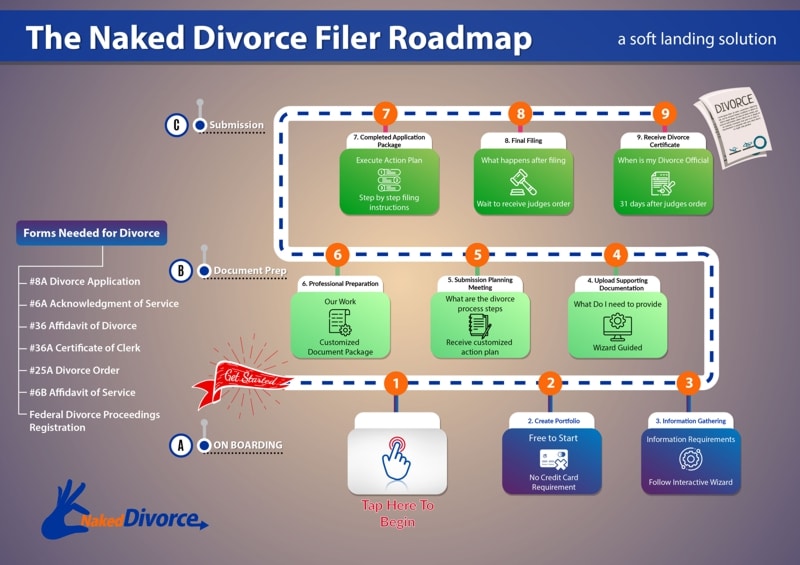
An uncontested divorce usually takes 4 to 6 months.
If all paperwork is correct and both parties agree, the process from filing to the final divorce order can be completed within this time frame.
The average cost of an uncontested divorce is between $200 and $500.
Court fees in Ontario typically range from $200 to $500, depending on the complexity and any additional services, like process serving or mediation.
After the divorce order, there’s a 31-day waiting period before it’s final.
Once the court issues a divorce order, it becomes final after 31 days, during which time no appeals are filed.
Yes, an uncontested divorce allows you to avoid court appearances.
When both parties agree on all terms, filing for an uncontested divorce can bypass court hearings, simplifying the process.
Yes, you generally need to be separated for one year to get a divorce.
The one-year separation period is a mandatory requirement unless the divorce is based on adultery or cruelty.
The fastest way to get a divorce is through an uncontested process.
In uncontested divorces, both spouses agree on all terms, which helps avoid lengthy court procedures, making the process quicker—usually within 4 to 6 months.
On average, an uncontested divorce in Ontario takes 4 to 6 months.
The timeline depends on factors like the complexity of the case, the cooperation between spouses, and any court backlogs. Contested divorces may take a year or longer to resolve.
An amicable divorce in Ontario typically takes 4-6 months after the one-year separation period
The timeline for an uncontested divorce in Ontario depends primarily on how efficiently you complete the process after fulfilling the mandatory one-year separation requirement. When both parties agree on all terms, the process moves significantly faster than contested divorces.
Several factors influence the timeline:
- Completion and accuracy of divorce paperwork
- Court processing times in your jurisdiction
- Agreement on key issues like property division, support, and parenting arrangements
- Availability of required documentation
- Whether you’re using a lawyer or filing independently
Working with an experienced family law professional can help streamline the process and ensure all documentation meets Ontario court requirements, potentially reducing delays in obtaining your divorce order.
An automatic divorce in Canada requires a one-year separation period and proper legal documentation.
In Canada, obtaining an uncontested divorce involves a straightforward but formal legal process. The procedure requires both parties to complete specific steps and meet mandatory waiting periods.
- Maintain a minimum one-year separation before filing for divorce
- Complete and file a divorce application with your provincial court
- Prepare a comprehensive separation agreement covering assets, support, and child custody
- Submit required documentation including marriage certificate and financial statements
- Pay applicable court filing fees (varies by province)
Once all requirements are met and both parties agree to the terms, the court can process the divorce without requiring a formal hearing. The final divorce certificate is typically issued 31 days after the court grants the divorce order.
Assets and property are divided according to provincial family law legislation with each spouse entitled to an equitable share.
In Canada, the division of matrimonial property during divorce is governed by provincial family law. Each province has specific rules for how assets acquired during marriage should be shared. Generally, the law recognizes both financial and non-financial contributions to the marriage and aims for an equitable distribution.
The process typically involves:
- Creating a complete inventory of all matrimonial assets and debts
- Determining which assets are considered family property versus excluded property
- Valuing all assets as of the separation date
- Calculating each spouse’s legal entitlement
It’s strongly recommended to seek professional legal counsel to understand your rights and ensure a fair division of property, as mistakes during this process can have long-lasting financial consequences.
A legal divorce requires court proceedings while an automatic divorce can be processed without a court appearance
In Canada, there are two main paths to divorce. A legal divorce involves formal court proceedings, requiring parties to appear before a judge who reviews the case and issues a divorce order. An automatic divorce, also known as a desk divorce, allows couples to complete the process without appearing in court, provided they meet specific criteria.
- Legal divorces typically involve contested issues requiring judicial oversight
- Automatic divorces are suitable for uncontested cases where both parties agree on all terms
- Both types require filing proper documentation with the court
- Processing times and costs vary significantly between the two options
To qualify for an automatic divorce, couples must have a complete separation agreement, agree on all matters including property division and child custody, and meet the one-year separation requirement under the Divorce Act.
In Canada, spouses must live separately for a minimum of 1 year before qualifying for a no-fault divorce.
The one-year separation period is a mandatory requirement under the Canadian Divorce Act, serving as proof that the marriage has broken down. During this time, spouses must live “separate and apart,” though they may reside in the same home for practical reasons if they maintain separate lives. The separation period begins on the date that both spouses begin living separately with the intention of ending their marriage.
- The one-year period must be continuous, though brief reconciliation attempts totalling up to 90 days are permitted
- Spouses can begin divorce proceedings before the year ends, but the divorce cannot be finalized until the full separation period is complete
- Other grounds for divorce, such as adultery or cruelty, do not require the one-year waiting period
An automatic divorce is a simplified Canadian divorce process that requires no court appearance when specific conditions are met.
Also known as a desk divorce, this streamlined process allows married couples to legally end their marriage without appearing before a judge. The key requirements include:
- Spouses must have lived separately for at least one year
- Both parties must agree to the divorce
- All financial and child-related matters must be settled
- Proper documentation must be filed with the court
While called “automatic,” the process still requires filing legal paperwork and paying court fees. Once approved by a judge, the divorce becomes final after a 31-day appeal period.

Sarah Bates
Sarah Bates is a Certified Divorce Specialist (CDS), Family Law Clerk, and Intern Family Mediator dedicated to supporting individuals and families through the complexities of separation and divorce. As the owner of SDB Divorce Specialist and an Associate at Divorce the SmartWay, Sarah brings a wealth of experience and a compassionate, client-centered approach to her work.
Credentials
- Certified Divorce Specialist (CDS): Completed specialized training in divorce communication, legal, financial, and emotional issues.
- Family Law Clerk: Experienced in the legal processes and documentation required for family law matters.
- Intern Family Mediator: Actively developing mediation skills to help families resolve disputes amicably and efficiently.
Professional Approach
- Sarah’s mission is to empower clients to achieve their goals while minimizing the emotional and financial impact of divorce.
Her services include:
- Divorce Strategy & Coaching: Helping clients set realistic goals, manage emotions, and treat divorce as a business transaction to achieve the best possible outcome.
- Legal and Practical Guidance: Drawing on her Family Law Clerk background to assist with legal documentation and procedural requirements.
- Mediation Support: As an intern mediator, Sarah facilitates constructive dialogue between parties, aiming for amicable resolutions that prioritize family well-being.
- Resource Navigation: Connecting clients with trusted professionals, including family lawyers, therapists, and financial advisors, to ensure comprehensive support throughout the divorce process.
Client Benefits
- Personalized Support: One-on-one coaching tailored to each client’s unique situation.
- Holistic Guidance: Addressing legal, financial, and emotional aspects of divorce.
- Cost-Effective Solutions: Strategies to reduce the financial burden and stress of separation.
- Empowerment: Tools and knowledge to make informed decisions and move forward confidently.
Commitment
Sarah Bates is recognized for her dedication, professionalism, and empathy. She is committed to helping clients navigate the challenges of divorce with clarity, dignity, and hope for a better future.