Every year, thousands of Ontarians file for divorce, yet many are surprised by just how expensive and time-consuming the process can be. Did you know that a contested divorce with legal fees can easily run into the tens of thousands of dollars? For many people, especially those on a tight budget, this isn’t just frustrating — it can feel overwhelming. But here’s the good news: uncontested divorces offer a much more affordable and straightforward alternative.
In this article, we’re going to walk you through exactly how to get a divorce in Ontario without paying expensive legal fees. Whether you’re navigating the divorce application in Ontario or considering a joint divorce, we’ll break down everything you need to know to keep costs low while still ensuring your divorce is finalized smoothly. From filing your divorce papers to understanding the timeline, we’ll guide you through the process step by step — without the hefty price tag!
So if you’re ready to learn how to take control of your divorce, save money, and avoid unnecessary stress, let’s dive in.
Divorce is often associated with high legal fees, emotional stress, and lengthy processes. But what if you could get through it without breaking the bank, especially if you’re already on a tight budget? In Ontario, there’s a way to file for divorce without hiring an expensive lawyer—through an uncontested divorce process. This guide will walk you through the process step by step, explaining how you can handle a divorce application in Ontario without costly legal fees, even if your finances are limited.
What Is a Divorce Application in Ontario and Why Is It Important?
Filing a divorce application is your formal request to legally end your marriage in the eyes of Ontario law. It’s the first step toward dissolving your marriage and addressing related issues like property division, child custody, and support.
Understanding the Types of Divorce Applications in Ontario
In Ontario, there are two main types of divorce applications: joint and sole.
- A joint divorce application means both you and your spouse agree on all terms (property, support, custody, etc.) and are working together to end the marriage.
- A sole divorce application is when one spouse initiates the divorce process, either because the other doesn’t agree or isn’t involved in the process.
Most uncontested divorces, where there’s no dispute, use joint applications. It’s faster, less expensive, and more straightforward. If your goal is to avoid paying expensive legal fees, a joint application is your best option.
The Role of the Divorce Act in Your Application Process
The Divorce Act governs all divorce applications in Canada, including Ontario. The Act outlines the legal grounds for divorce, how spousal support and child support are determined, and ensures that both parties’ rights are protected. This legislation is essential for guiding your divorce process and understanding your rights, even if you’re not working with a lawyer.
Eligibility Requirements for Filing a Divorce Application in Ontario
Before you can file a divorce application, there are several eligibility requirements you must meet.
Residency Requirements for Divorce in Ontario
To apply for a divorce in Ontario, at least one spouse must have lived in Ontario for a minimum of one year before filing. This is a non-negotiable condition outlined by the Divorce Act and applies to both joint and sole divorce applications.
Legal Grounds for Divorce: What You Need to Prove
In Ontario, there are three legal grounds for divorce:
- Separation: You and your spouse have been living apart for at least one year.
- Adultery: Your spouse has been unfaithful.
- Cruelty: You have been subjected to emotional or physical abuse.
For most uncontested divorces, the simplest ground is separation. You and your spouse agree to part ways, and after living apart for one year, you can file for divorce.
Joint vs. Sole Divorce Applications: Which One Is Right for You?
Choosing between a joint or sole divorce application depends on your situation. Here’s a breakdown to help you decide.
When to Consider a Joint Divorce Application
A joint divorce application is ideal if you and your spouse agree on all terms. It’s quicker, more affordable, and often results in a smoother process. Since both parties are on the same page, there’s no need for drawn-out legal battles, saving both time and money.
Joint applications can also be filed online in Ontario, making it even more convenient. You can submit your forms, pay the necessary fees, and track your application status without stepping into a courtroom.
Understanding the Sole Divorce Application Process
A sole divorce application is the best option if your spouse is uncooperative or you cannot reach an agreement. While it can be slightly more complicated and may take longer, it’s still possible to file without a lawyer if you’re careful to follow the steps and meet the necessary legal requirements.
Documents You Need to File a Divorce Application in Ontario
Filing for divorce requires submitting specific forms to Ontario Family Court. Here’s a quick overview.
Key Forms Required for Divorce Application Submission
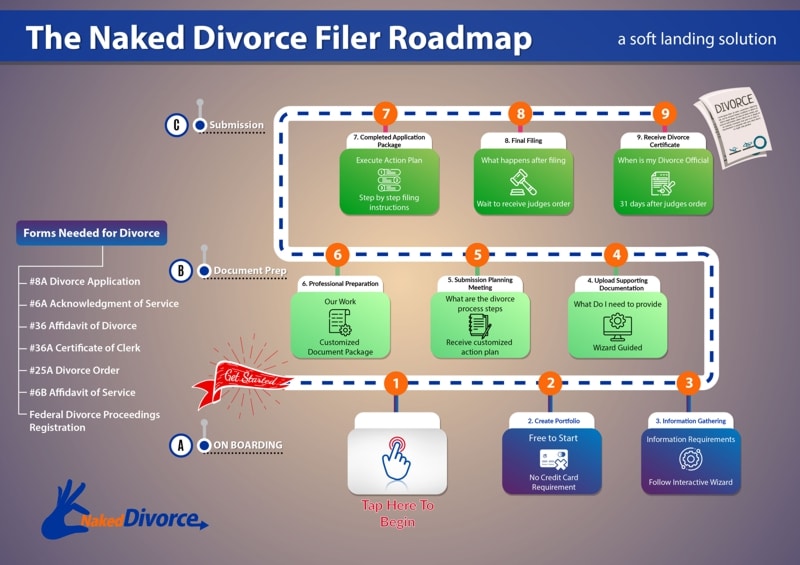
- Form 8A: This is your main Divorce Application Form. It outlines the basic details of your marriage, separation, and any requests you’re making (such as custody or support).
- Form 36: You’ll also need to complete a Motion for Divorce form, which serves as your official request for a divorce order.
- Marriage Certificate: A certified copy of your marriage certificate is required to verify the legal details of your marriage.
Where and How to Submit Your Documents
In Ontario, you can either file your forms at your local Family Court or submit them online through the Ontario Joint Divorce Application Online portal. Filing online simplifies the process, reducing the need for court visits, and in many cases, speeding up the procedure.
How to Fill Out and Submit Your Divorce Application
Filling out your divorce application doesn’t need to be overwhelming. Here’s how to do it step by step.
Step-by-Step Instructions for Completing Your Application
- Fill Out Form 8A: Provide your personal details, marriage information, and separation date. Specify whether this is a joint or sole application.
- Complete Form 36: Indicate your request for a divorce order and confirm that all terms have been settled.
- Attach Your Marriage Certificate: Ensure that you have a certified copy of your marriage certificate, as this is a required document.
- Submit Your Forms: Once your forms are completed, submit them either in person at Family Court or through the Ontario online portal.
Common Mistakes to Avoid During the Filing Process
- Incorrect Information: Ensure all personal and marriage details are correct.
- Missing Documents: Double-check that your marriage certificate and all required forms are included.
- Wrong Filing Fees: Make sure you’re paying the correct fee based on the court’s guidelines.
Filing Fees and Other Costs for a Divorce Application in Ontario
While uncontested divorce is more affordable than a contested one, there are still fees involved.
Breakdown of Filing Fees in Ontario Family Courts
- Filing Fee: The standard filing fee for a divorce application in Ontario is $212.
- Final Divorce Order Fee: An additional fee of $420 is required when you file for the final divorce order.
These fees are for the administrative processing of your divorce application and don’t include legal representation, which you can avoid by handling the application yourself.
Options for Reducing or Waiving Filing Fees
If you’re unable to pay these fees due to financial hardship, you can apply for a fee waiver through the court. This is an excellent option if you’re struggling to meet the costs and are filing your divorce without legal representation.
What Happens After You File Your Divorce Application?
After submitting your application, here’s what to expect next.
Processing Timelines and What to Expect
Once your divorce application is filed, the court will begin processing it. If everything is in order, expect a processing time of 8-12 weeks for your initial application. Delays can occur if any forms are missing or incorrect.
Receiving Your Divorce Order and Finalizing the Process
Once processed, you’ll receive a Divorce Order, officially ending your marriage. After 31 days, you can request a Divorce Certificate, which serves as proof that your marriage is legally dissolved. You can request your divorce certificate in Ontario either online or in person at the courthouse.
How to Get Professional Help With Your Divorce Application
While filing for an uncontested divorce can be straightforward, professional help can simplify the process.
When Should You Consult a Certified Divorce Specialist (CDS)?
If you’re unsure about any aspect of the application, a Certified Divorce Specialist (CDS) can guide you through the steps. They can help review your documents, ensure you meet the legal requirements, and offer emotional support, helping you avoid costly mistakes that could delay your divorce.
How Professional Support Can Simplify Your Divorce Application
A CDS can save you time, money, and stress by helping you complete your divorce application correctly the first time. They can review your forms, advise you on the best course of action, and offer practical solutions for ensuring a smooth process—without the high cost of a lawyer.
Divorce can be complicated, but it doesn’t have to be financially draining. By understanding the process, using DIY divorce forms, and getting the right support when needed, you can complete your divorce application in Ontario without paying expensive legal fees. If you’re unsure about any part of the process or just need some guidance, booking a free consultation with a Certified Divorce Specialist could be the key to making the process smooth and stress-free.